


Introduction
You rank number one on Google. Your organic traffic looks great. But when a customer asks ChatGPT or Perplexity for the best tool in your niche, your brand is nowhere to be found.
This is the new reality of search. Buyers do not click blue links anymore. They read synthesized answers directly from AI platforms. If your brand is missing from those AI answers, you are losing sales to competitors who adapted early.
Traditional SEO tools cannot fix this. They track clicks and link positions. You need a new type of software to measure AI citations, share of voice, and brand sentiment.

Here at Techniver, we spent the last few months testing the best AI visibility tools on the market. We ran identical prompts across ChatGPT, Claude, Gemini, and Google AI Overviews.
Below is our complete guide to the 15 best LLM rank trackers in 2026, categorized by exactly what they do best
The Shift from SEO to GEO (Why You Need an AI Tracker)
Generative Engine Optimization (GEO) is replacing traditional SEO.
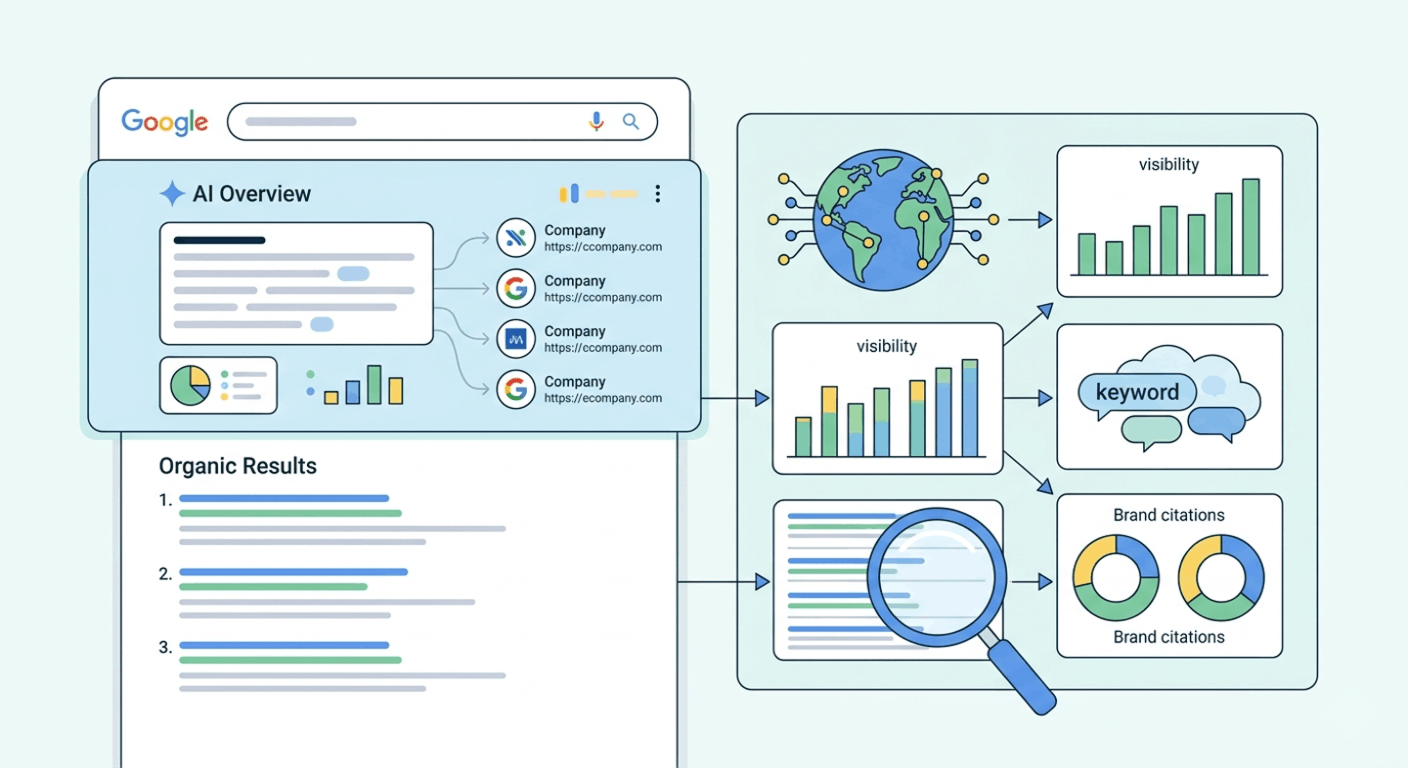
When Google rolls out AI Overviews, it pushes regular search results far down the page. Users get their answers instantly. This creates a massive “Visibility Gap.” You might get thousands of impressions in Google Search Console, but zero clicks.
AI platforms do not care about your domain authority. They care about semantic relevance, structured data, and entity clarity. An AI rank tracker shows you exactly which prompts trigger your brand name and which ones trigger your competitors.
Watch: How AI Search Visibility & LLM Tracking Works (The Right Way)
- Why Keyword Tracking Fails in 2026: Traditional 1-to-1 keyword tracking is useless for AI search. You need to track “Prompts” and user intent.
- Mentions vs. Citations: The clear difference between an AI simply mentioning your brand name versus providing an actual clickable link (Citation) to your website.
- Where to Track: Why it is critical to track your visibility across ChatGPT, Google Gemini, and Perplexity simultaneously.
How We Evaluated the Best LLM Visibility Tools
Not all AI trackers do the same job. We judged these 15 platforms using four strict rules:
- LLM Coverage: Does it only track ChatGPT, or does it cover Claude, Gemini, Copilot, and Perplexity?
- Citation Extraction: Does the tool give you the exact URL the AI used as a source? Mentioning a brand name is not enough; you need the exact link.
- Hallucination Detection: Does the tool warn you if the AI invents fake pricing or wrong features about your product?
- Actionability: Does the dashboard just show numbers, or does it give you a clear content brief to fix the problem?
Top AI Search Monitoring Tools (2026 Quick Comparison)
If you are in a hurry, here is a quick look at the top contenders based on our testing.
| Tool Name | Best Fit For | AI Platforms Tracked | Starting Price |
| Geoptie | Affordable GEO tracking | ChatGPT, Claude, Perplexity, Gemini | $49/mo |
| Omnia | Startups needing execution | ChatGPT, Perplexity, Google AI Mode | €79/mo |
| SE Ranking | Teams blending SEO + GEO | AI Overviews, ChatGPT, Gemini | $129/mo |
| KIME | Accuracy & Hallucination checks | 8+ platforms (incl. Copilot) | $149/mo |
| Semrush AI | Existing Semrush users | ChatGPT, AI Overviews, Gemini | $99/mo |
| Profound | Global Enterprise teams | 10+ engines (incl. Meta AI, Grok) | $99/mo |
The Best AI Visibility Trackers (Categorized by Use Case)
We broke these tools down by who they serve best. Pick the category that fits your team size and budget.
1. Best for Action & Accuracy: Omnia, KIME & LLMClicks
Most tools just show you data. These three actually tell you what to do next.
- Omnia: Omnia is brilliant because of its “Action Layer.” It does not just say you are losing to a competitor. It gives you a specific content brief. It tells you to write a 2,000-word comparison guide and exactly what headers to use. It tracks visibility by country using real browsers.
- KIME: KIME is built natively for GEO. It tracks prompt-level citations and spots content gaps. It automatically turns citation data into a task list for your writers.
- LLMClicks.ai: This is the king of hallucination detection. If ChatGPT tells a user your software costs $50 when it actually costs $20, LLMClicks flags it immediately. It starts at just $49/month.

2. Best for Budget & Agencies: Geoptie, Peec AI & Otterly
If you run an agency or have a tight budget, these platforms give you the most value.
- Geoptie: At $49 a month, Geoptie is a steal. It is the only budget tool that includes Claude in its base tier. It tracks brand mentions and citations perfectly. It also offers free GEO audit tools before you even pay.
- Peec AI: Peec AI is built for agencies. It offers amazing side-by-side competitor visibility comparisons. It includes sentiment analysis to show if AI speaks positively or negatively about your clients. Pricing starts at €89/month.
- Otterly AI: This is the cheapest paid option on the market. For $29 a month, you can track 15 prompts across major platforms. It is perfect for solo marketers who just need a baseline check.
3. Best for Integrated SEO: SE Ranking, Semrush & Ahrefs
If you already use a major SEO suite, you might not need a standalone GEO tool.
- SE Ranking: SE Ranking successfully merged traditional rank tracking with LLM visibility. You can see your organic positions and AI Overview placements on the same screen. It tracks AI Mode, ChatGPT, and Gemini seamlessly.
- Semrush AI Visibility Toolkit: An add-on for Semrush users. It costs an extra $99/month per domain. It tracks prompt performance and links directly with your existing keyword research workflow.
- Ahrefs Brand Radar: Ahrefs boasts a massive database of 400 million organic prompts. It tracks citations across the web, YouTube, and Reddit. However, it is pricey. Tracking just one AI platform starts at $398/month.

4. Best for Enterprise Scale: Profound, Scrunch AI & seoClarity
Large brands need complex data, multi-region tracking, and strict security compliance.
- Profound: Profound tracks up to 10 answer engines, including DeepSeek and Meta AI. It features SOC2 compliance and automated prompt discovery. It simulates real buyer journeys. Full enterprise access costs thousands, though a limited ChatGPT-only tier exists for $99/month.
- Scrunch AI: Scrunch tracks AI crawler bots. It tells you exactly when an AI agent visits your website to read your data. It starts at $250/month and is highly focused on brand safety.
- seoClarity: Built for massive scale. You can track up to 1,000 keywords concurrently for AI Overview triggers. Pricing is entirely custom.
5. Best for Content & E-commerce: Yotpo, ZipTie & HubSpot AEO
These tools fix specific niche problems.
- Yotpo Discover: AI models love real user reviews. Yotpo Discover uses your existing customer reviews to feed LLMs. It deploys active agents to fix your schema and push positive sentiment on retail marketplaces. It is a must-have for e-commerce.
- ZipTie.dev: ZipTie focuses mostly on Google AI Overviews. It creates an “AI Success Score” and helps you identify technical gaps holding your content back. It starts at $69/month.
- HubSpot AEO: HubSpot offers a free AI grader tool. If you want continuous monitoring, it costs $50/month. It is a great, simple choice if your team already uses the HubSpot CRM.
3 Proven Strategies to Improve Your AI Brand Visibility
Tracking your data is step one. Step two is actually winning the AI citations. Here is how you do it.likely to improve their overall search performance in the future.
- Optimize for Information Gain: AI models hate generic content. They look for unique statistics, original research, and fresh case studies. If your page says the exact same thing as five other sites, the AI will not cite you. Publish new data.
- Use Clear Chunking & Schema: AI bots do not read pages top-to-bottom. They scan for answers. Use clear H2 and H3 headings formatted as questions. Put a quick TL;DR or comparison table at the very top of your article.
- Build Citation Provenance: LLMs trust highly moderated platforms. If you want ChatGPT to recommend your product, you need people talking about you on Reddit, Quora, and G2. AI reads these third-party sites to verify your claims.

Conclusion: Which AI Rank Tracker Should You Choose?
The market is flooded with new tools, but your choice depends on your daily workflow.
- If you want to turn data into written content quickly: Go with Omnia.
- If you need deep accuracy checks to stop AI from lying about your prices: Choose LLMClicks.ai or KIME.
- If you want to keep your SEO and AI data in one place: Use SE Ranking.
- If you have a tiny budget but want great data: Sign up for Geoptie.
- Stop checking your organic rankings every morning. Start tracking the platforms where your buyers are actually making their decisions.
FAQs – Rank Tracker for AI Overviews
What is an AI Overview Rank Tracker?
An AI Overview Rank Tracker is an SEO tool used to monitor how websites appear in Google’s AI-generated search summaries. It tracks AI citations, visibility, and brand mentions. Unlike traditional tools, it focuses on AI search results. This helps understand AI-driven SEO performance.
Why is AI Overview tracking important?
It is important because AI Overviews often appear above normal search results. This can affect website traffic and visibility. Businesses use it to stay competitive in AI search. It helps improve the overall SEO strategy.
How does AI Overview rank tracking work?
These tools scan keywords and check if Google shows AI-generated answers. They record which websites are cited in those answers. The system then analyzes visibility and trends. This provides performance insights.
What data do AI Overview trackers show?
They show AI citations, keyword visibility, and competitor mentions. They also track whether a brand appears in AI summaries. Some tools provide trend and performance reports. This helps improve SEO decisions.
What are the challenges of AI Overview tracking?
AI results are not stable and change frequently. Google also provides limited official data. This makes tracking more difficult and less consistent. Businesses often rely on third-party tools.
What is the future of AI Overview tracking?
The future is expected to grow with AI search expansion. More advanced tools will improve tracking accuracy. SEO will combine traditional rankings with AI visibility. This will become a key part of digital marketing.