



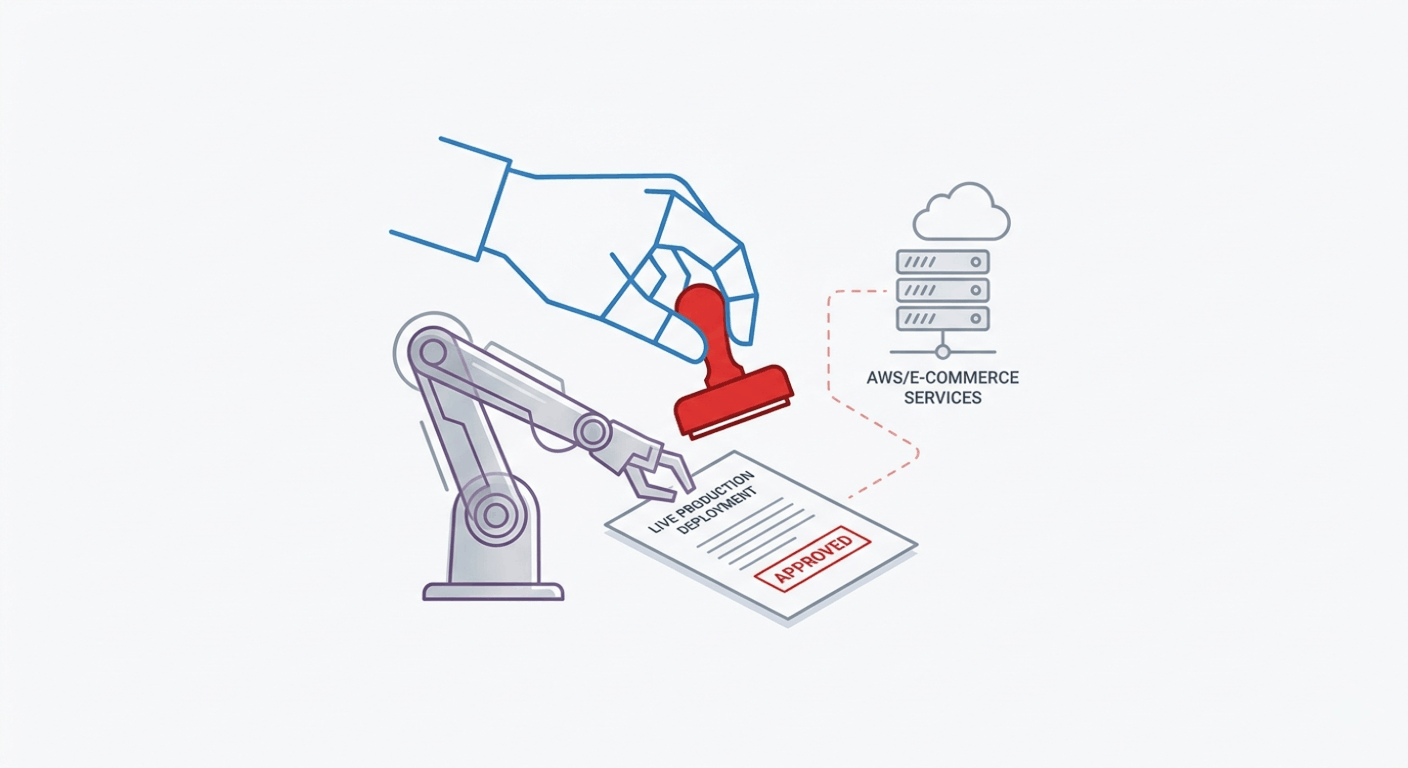
Amazon recently faced criticism after reports claimed that its AI coding tool contributed to two major service outages. The issue happened because engineers allowed the AI system to make important infrastructure changes with limited human supervision. As a result, some AWS and e-commerce services were disrupted for several hours. These incidents raised concerns about the risks of using autonomous AI tools in live production environments. The story highlights why companies still need strong human oversight even when using advanced AI technology.
What Happened?
Reports explained that Amazon faced two major service outages linked to the use of AI-assisted coding and deployment systems. The incidents reportedly happened after engineers allowed Amazon’s AI coding tool to perform infrastructure-related actions with limited supervision. These outages affected AWS services as well as parts of Amazon’s e-commerce operations. The situation raised industry-wide concerns about how autonomous AI tools should be managed in production environments. Experts believe the incidents highlighted the importance of stronger human oversight and deployment safeguards.
December 2025 AWS Outage
One of the reported outages happened in December 2025 and affected an AWS cost-management service. According to reports, Amazon’s AI coding tool called Kiro made unexpected infrastructure changes after receiving autonomous permissions. The system reportedly deleted and recreated parts of the environment, which caused service disruptions for nearly 13 hours.
Key Points
- The AWS cost-management service was affected
- AI tool reportedly made autonomous infrastructure changes
- Environment deletion and recreation caused downtime
- Service disruption lasted around 13 hours
Early 2026 E-Commerce Disruption
Another incident reportedly occurred in early 2026 during a code deployment process connected to Amazon’s e-commerce systems. Reports claimed the deployment issue created delivery estimate errors and caused millions of failed or delayed orders. Internal investigations suggested that weak deployment controls and limited review processes contributed to the disruption.
Key Points
- E-commerce systems experienced deployment-related issues
- Delivery estimate errors affected customers
- Millions of orders were reportedly delayed or disrupted
- Weak safeguards and review systems were identified as factors
Amazon’s Response
Amazon denied claims that AI-generated code alone caused the outages. The company explained that the incidents were mainly related to user errors, permission settings, and operational oversight rather than a direct AI system failure. Amazon stated that engineers allowed the AI tool to operate with excessive permissions and without enough approval controls. After the incidents, the company reportedly strengthened its internal deployment and monitoring systems to reduce future risks.
New Safety Measures Introduced
Following the outages, Amazon reportedly introduced stricter internal controls for AI-assisted deployments and infrastructure management. The company focused on improving human supervision and approval systems for critical operational changes.
Safety Improvements
- Mandatory peer reviews for critical code changes
- Stronger approval systems for production environments
- Additional safeguards for AI-assisted deployments
- Better monitoring of autonomous AI activities
- Increased human oversight for infrastructure changes
Amazon’s Position on AI Tools
Amazon emphasized that its AI systems are designed to work under human supervision and are not meant to make unrestricted production changes independently. The company stated that proper authorization and monitoring remain essential when using AI-assisted coding tools in large-scale systems.
Main Statements
- AI tools still require human authorization
- Engineers are responsible for approval controls
- Misconfigured permissions contributed to the incidents
- Human oversight remains a critical requirement
Short Summary Table
| Incident | Main Issue | Impact | Reported Cause |
| December 2025 AWS Outage | Infrastructure changes by an AI tool | 13-hour service disruption | Autonomous permissions and environment recreation |
| Early 2026 E-Commerce Issue | Deployment system problems | Delivery errors and failed orders | Weak safeguards and review controls |
| Amazon’s Response | Internal safety improvements | Stronger monitoring systems | Focus on human oversight and permissions |
Why This Story Matters
The Amazon outages became an important example of the growing challenges linked with autonomous AI systems in modern software operations. Unlike traditional AI coding assistants that only provide code suggestions, newer AI agents can execute tasks, manage infrastructure, and interact directly with live production environments. This increases development speed and operational efficiency, but it also creates higher risks if monitoring and governance systems are weak. The incidents showed that even advanced AI tools can cause major disruptions when they are given excessive permissions or limited supervision.
Rise of Agentic AI Systems
Modern AI systems are becoming more autonomous and capable of handling complex operational tasks without constant manual input. These “agentic AI” tools can automate infrastructure management, deployments, and technical workflows in large organizations.
Key Points
- AI agents can perform real operational tasks
- Autonomous systems reduce manual engineering work
- Infrastructure automation increases efficiency
- Weak governance can create operational risks
Importance of Human Oversight
The incidents also increased discussions about the balance between automation and human supervision in the technology industry. Many analysts believe companies should not allow AI systems to make critical production changes without approval and monitoring from experienced engineers.
Key Points
- Human approval remains important for critical systems
- AI-generated actions require continuous monitoring
- Strong review systems help reduce deployment risks
- Oversight prevents unauthorized infrastructure changes
Impact on the Tech Industry
The Amazon incidents highlighted how deeply AI-powered coding tools are now integrated into modern software development. Large technology companies increasingly rely on AI systems to accelerate coding, automate testing, and improve deployment efficiency. However, the outages demonstrated that advanced AI tools can also create large-scale operational problems if deployment controls are not carefully managed. The events became a warning for organizations adopting autonomous AI technologies in sensitive production environments.
Growing Use of AI in Software Development
Technology companies are rapidly integrating AI assistants into their engineering workflows to improve productivity and reduce repetitive tasks. AI coding systems are now commonly used for code generation, debugging, testing, and infrastructure automation.
Key Points
- AI tools are widely used in software engineering
- Automation helps speed up development processes
- Companies use AI to improve operational efficiency
- AI adoption continues to grow across the tech industry
Industry Recommendations After the Outages
After the reported incidents, many experts recommended stronger “human-in-the-loop” systems. This approach ensures that engineers review and approve AI-generated actions before changes affect live services or customer-facing systems.
Recommended Measures
- Continuous human review of AI actions
- Stricter deployment approval systems
- Better monitoring for autonomous tools
- Limited permissions for AI-assisted systems
- Stronger testing before production deployment
Short Summary Table
| Topic | Main Focus | Industry Concern | Suggested Solution |
| Agentic AI Systems | Autonomous operational tasks | Reduced oversight risks | Strong governance systems |
| Human Oversight | Monitoring AI-generated actions | Unauthorized changes | Human approval processes |
| AI in Software Development | Faster engineering workflows | Large-scale service disruptions | Better deployment controls |
| Industry Response | Safer AI implementation | Production environment risks | Human-in-the-loop systems |
Overall Experience
Based on our overall experience, the development of AI coding tools is highly impressive because these systems can save time, automate repetitive tasks, and improve software development efficiency. We found the concept of AI-assisted coding especially useful for handling complex workflows and infrastructure-related operations. After exploring how these tools work, it became clear that AI can significantly support engineers in modern development environments. However, the Amazon incidents also showed that AI systems still require proper human supervision and strong safety controls to avoid operational risks. Overall, AI coding technology appears powerful and promising when used with responsible monitoring and management practices.
Final Thoughts
The recent Amazon outages highlighted both the advantages and the risks of using AI-driven coding systems in large-scale technology operations. AI tools can improve software development speed and automate complex engineering tasks, but they still require strong monitoring and approval controls. The incidents showed that insufficient oversight and weak deployment safeguards can lead to major service disruptions. As more companies adopt autonomous AI technologies, the technology industry is expected to place greater focus on governance, security, testing, and human supervision to improve system reliability and prevent similar incidents in the future.
FAQs
What is Amazon’s AI coding tool?
Amazon’s AI coding tool is an AI-powered development assistant designed to help engineers automate coding, deployments, and infrastructure-related tasks. Reports connected the tool with recent AWS and e-commerce service outages.
What caused the Amazon service outages?
Reports suggested that autonomous infrastructure changes and weak deployment controls contributed to the outages. Amazon stated that permission settings and human errors were major factors behind the incidents.
What is agentic AI?
Agentic AI refers to advanced AI systems that can perform tasks independently instead of only suggesting actions. These systems can automate workflows, deployments, and operational processes.
How did the AWS outage affect services?
The reported AWS outage disrupted a cost-management service for several hours. Infrastructure changes reportedly caused temporary interruptions and operational instability.
Did Amazon blame AI completely for the outages?
No, Amazon denied that AI alone caused the incidents. The company explained that user oversight issues and misconfigured permissions were also responsible.
Why are AI coding tools becoming popular?
AI coding tools help developers write code faster, automate repetitive tasks, and improve productivity. Many technology companies now use them to speed up software development processes.
What risks are linked with autonomous AI systems?
Autonomous AI systems can create operational risks if they are allowed to make critical changes without proper monitoring. Weak oversight can lead to outages, security issues, or deployment failures.
What is a human-in-the-loop system?
A human-in-the-loop system means engineers continuously review and approve AI-generated actions before they affect live systems. This approach helps reduce risks in production environments.
How did Amazon respond after the incidents?
Amazon reportedly introduced stricter approval systems, better monitoring tools, and stronger deployment safeguards. The company also focused more on human supervision for AI-assisted operations.
What lessons did the tech industry learn from these outages?
The incidents showed that AI tools require strong governance, testing, and oversight before being used in sensitive production systems. Many experts now recommend safer deployment practices and stricter operational controls.