



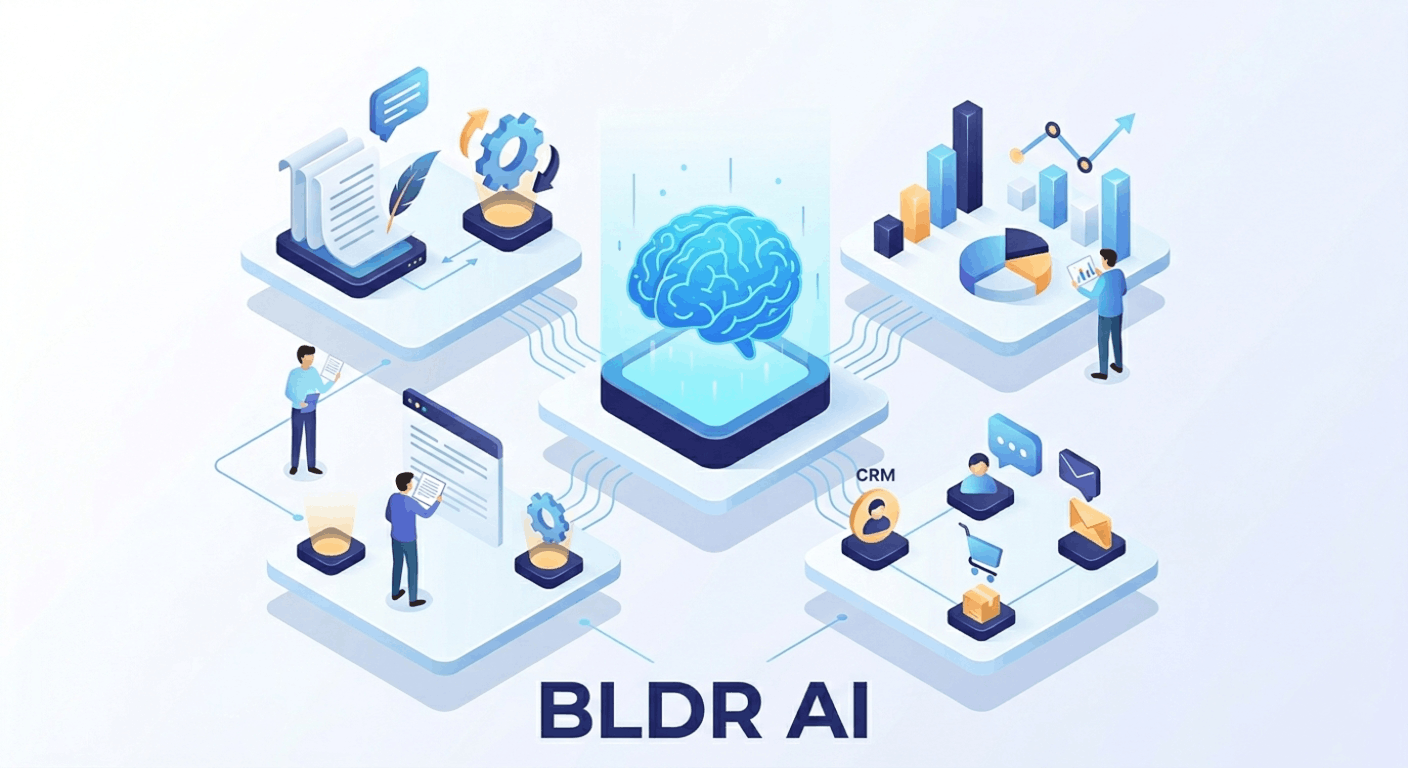
Introduction to BLDR AI
BLDR AI is an AI-powered platform that helps businesses and creators automate tasks, improve workflows, and increase productivity. In 2026, BLDR AI is gaining attention because of its smart automation, AI content generation, and business management features. Many companies use AI platforms like BLDR AI to save time, reduce manual work, and improve customer experience. As artificial intelligence continues to grow, BLDR AI is becoming an important tool for digital transformation and modern business operations.
Smart Content Generation
BLDR AI supports AI-generated content creation for blogs, product descriptions, email campaigns, marketing copy, and social media posts. AI writing systems use natural language processing technology to create readable and structured content quickly. This helps businesses maintain consistent publishing schedules while reducing the time required for manual content writing. AI-generated content tools are widely used in digital marketing, SEO, and e-commerce industries.
Workflow Automation
Workflow automation is one of the strongest capabilities associated with BLDR AI platforms. The system can automate repetitive tasks such as customer responses, scheduling, reporting, lead management, and data processing. Automation reduces manual effort and allows businesses to focus on strategic activities instead of routine operations. Companies often use AI automation tools to improve efficiency, speed, and operational accuracy.
AI Data Analysis
BLDR AI also supports AI-driven data analysis and business intelligence functions. Artificial intelligence systems can process large amounts of information quickly and identify useful trends, patterns, and customer behavior insights. Businesses can use these analytics to make data-driven decisions and improve marketing strategies, customer service, and operational planning. Real-time analysis provides faster access to performance metrics and business reports.
Integration With Other Tools
Many AI platforms, including BLDR AI, support integration with third-party software and business applications. These integrations may include CRM systems, marketing platforms, project management tools, communication software, and e-commerce systems. Integration capabilities allow businesses to connect multiple tools into a single workflow environment. This flexibility helps organizations manage operations more efficiently across different departments.
Table About BLDR AI
| Feature | Description |
| Platform Type | AI-powered automation platform |
| Main Purpose | Improve productivity and automate workflows |
| Key Technology | Artificial intelligence and machine learning |
| Common Uses | Content creation, automation, analytics |
| Target Users | Businesses, marketers, creators, startups |
| Major Benefit | Saves time and reduces manual work |
| Integration Support | CRM, marketing, e-commerce, communication tools |
| Skill Requirement | Beginner-friendly with low-code features |
Benefits of Using BLDR AI
BLDR AI is becoming popular because it helps businesses improve efficiency through artificial intelligence and automation technologies. AI platforms are widely used to reduce repetitive tasks, improve workflow speed, and support data-driven decision-making. Many organizations in 2026 are adopting AI systems to increase productivity, enhance customer support, and lower operational costs. BLDR AI is commonly associated with workflow automation, AI content generation, analytics, and smart business management solutions.
Saves Time and Resources
AI automation reduces the amount of manual work required for repetitive business processes. Tasks that normally take hours can often be completed within minutes using AI-powered systems and workflow automation tools.
- Automates repetitive tasks efficiently
- Reduces manual workload for teams
- Helps businesses complete projects faster
- Improves operational efficiency
Improves Productivity
AI platforms help teams manage multiple tasks more effectively by streamlining workflows and reducing delays. Businesses can improve task management and overall performance through automated systems.
- Speeds up workflow management
- Supports faster task completion
- Helps teams handle larger workloads
- Reduces process interruptions
Better Customer Experience
AI chat systems and automated support tools allow businesses to respond to customer inquiries more quickly. Faster communication can improve customer satisfaction and service quality.
- Provides automated customer responses
- Improves response times
- Supports 24/7 customer assistance
- Enhances user satisfaction
Cost-Effective Solution
Businesses often use AI systems to reduce operational expenses and improve resource management. Automation can minimize repetitive labor costs and improve workflow accuracy.
- Reduces repetitive operational costs
- Improves business efficiency
- Minimizes human error in routine tasks
- Supports scalable business operations
Industries Using BLDR AI
AI platforms like BLDR AI are being adopted across multiple industries because of their automation and data-processing capabilities. Different sectors use artificial intelligence to improve efficiency, customer engagement, analytics, and digital operations. As AI technology continues evolving, businesses are integrating automation tools into their daily workflows to remain competitive. BLDR AI is commonly associated with industries that rely on digital processes, customer interaction, and workflow optimization.
Marketing and Advertising
Digital marketing companies use AI platforms for content creation, campaign analysis, audience targeting, and marketing automation. AI helps marketers improve engagement and optimize advertising strategies.
- Generates marketing content quickly
- Supports audience targeting analysis
- Improves campaign performance tracking
- Helps automate marketing workflows
E-Commerce Businesses
Online stores use AI systems to improve customer experience, product recommendations, and inventory management. AI automation also supports personalized shopping experiences.
- Provides AI-based product recommendations
- Supports automated customer service
- Helps analyze inventory trends
- Generates product descriptions automatically
Education Sector
Educational platforms use AI tools for smart learning systems and personalized educational experiences. AI technology can also support grading and digital classroom management.
- Supports personalized learning systems
- Helps automate grading processes
- Improves online learning experiences
- Assists with educational data analysis
Healthcare and Business Operations
Healthcare organizations and businesses use AI for administrative automation, scheduling systems, and workflow management. AI tools help improve operational efficiency in large organizations.
- Automates scheduling systems
- Supports healthcare administration
- Improves workflow organization
- Reduces manual operational tasks
How BLDR AI Is Different From Traditional Software
Traditional software systems operate through fixed programming instructions and predefined workflows. AI-powered platforms like BLDR AI use machine learning and intelligent automation to analyze data, adapt to user behavior, and improve performance over time. This flexibility allows AI systems to provide smarter recommendations and automate decision-making processes more efficiently. Businesses often prefer AI-driven systems because they can optimize workflows and handle complex tasks with less manual intervention.
Adaptive Learning Technology
Unlike standard software, AI systems can learn from data patterns and improve their performance through machine learning algorithms. This allows automation systems to become more accurate over time.
- Learns from user interactions
- Improves system performance gradually
- Supports intelligent decision-making
- Adapts to changing business needs
Smart Automation Capabilities
AI platforms can automate complex workflows more efficiently compared to traditional software systems. Intelligent automation reduces the need for constant manual monitoring.
- Automates advanced business tasks
- Reduces repetitive manual processes
- Supports faster workflow execution
- Improves operational consistency
Real-Time Data Processing
AI systems can analyze large amounts of information quickly and provide real-time insights for businesses. This helps organizations make faster and more accurate decisions.
- Processes data rapidly
- Provides real-time business insights
- Supports analytics-based decision making
- Helps identify trends efficiently
Is BLDR AI Worth Using?
Businesses looking to improve automation, workflow management, and operational efficiency may find BLDR AI useful for modern digital processes. AI platforms are commonly used to save time, improve productivity, and support scalable business operations. However, the effectiveness of any AI platform depends on implementation quality, business objectives, and workflow requirements. Companies should carefully evaluate AI tools based on features, scalability, integration support, and operational goals before adoption.
Business Efficiency Improvement
AI automation tools can help businesses improve workflow efficiency and reduce repetitive operational tasks. Companies often use AI systems to optimize digital performance.
- Supports workflow optimization
- Helps reduce manual workload
- Improves operational speed
- Enhances productivity management
Scalability and Flexibility
AI platforms are often designed to support growing businesses through scalable automation systems and flexible integrations. This makes them useful for different business sizes.
- Supports business expansion
- Integrates with multiple systems
- Adapts to workflow requirements
- Helps manage larger operations
Important Factors Before Using BLDR AI
Businesses should evaluate AI platforms carefully before implementation to ensure they meet organizational requirements and technical needs.
- Business goals and objectives
- Data quality and system accuracy
- Platform pricing and scalability
- Required integrations and features
Short Table About BLDR AI
| Category | Details |
| Platform Type | AI-powered automation platform |
| Main Benefit | Saves time and improves efficiency |
| Common Industries | Marketing, e-commerce, education, and healthcare |
| Core Technology | Artificial intelligence and machine learning |
| Main Functions | Automation, analytics, content generation |
| Customer Support | AI chat systems and automated responses |
| Business Advantage | Reduces repetitive work and operational costs |
| Key Difference | Learns from data, unlike traditional software |
Future of BLDR AI
BLDR AI represents the growing advancement of artificial intelligence and automation technologies in modern businesses. As AI systems continue evolving in 2026, platforms like BLDR AI are expected to improve workflow automation, analytics, and digital operations. The future of AI platforms is strongly connected with smarter machine learning systems, faster data processing, and more personalized user experiences.
Better Natural Language Processing
Future AI platforms are expected to improve natural language processing capabilities for more accurate communication and content generation. Advanced NLP systems may help businesses create more human-like interactions and automated responses.
- Improves AI communication accuracy
- Supports advanced content generation
- Enhances chatbot interactions
- Provides better language understanding
Smarter Automation Systems
AI automation is expected to become more intelligent and efficient with advanced machine learning technologies. Businesses may use smarter automation tools to handle complex workflows with minimal manual input.
- Automates complex business operations
- Reduces manual workflow management
- Improves operational efficiency
- Supports intelligent task execution
Personalized AI Experiences
Future AI systems may provide more personalized experiences by analyzing user behavior and preferences. Personalized automation can improve customer engagement and digital interaction quality.
- Delivers customized user experiences
- Improves customer engagement strategies
- Supports personalized recommendations
- Enhances digital interaction quality
Improved Integrations
AI platforms are likely to support deeper integration with business software, cloud systems, and digital tools. Improved integrations can help organizations manage workflows more efficiently across departments.
- Connects with multiple business tools
- Improves workflow synchronization
- Supports centralized operations
- Enhances system compatibility
Faster Decision-Making Systems
Future AI platforms may process large amounts of data more quickly to provide real-time insights and automated decisions. Faster analytics can help businesses respond rapidly to market trends and operational changes.
- Provides real-time business insights
- Supports faster data analysis
- Improves decision-making speed
- Helps identify market trends quickly
Role of BLDR AI in Digital Transformation
As businesses continue adopting artificial intelligence technologies, AI platforms like BLDR AI may play an important role in digital transformation strategies. Organizations are increasingly using AI systems to improve productivity, automate workflows, and enhance customer experiences. The continued growth of AI adoption suggests that intelligent automation platforms will remain important in modern business environments.
Final Thoughts
BLDR AI reflects the growing demand for AI-powered automation and smart digital solutions in modern businesses. As artificial intelligence technology continues to evolve, platforms like BLDR AI are helping organizations improve workflow efficiency, reduce manual tasks, and enhance productivity. AI systems are increasingly being used for content generation, customer support, analytics, and business automation across multiple industries. With the continued adoption of digital transformation strategies, AI platforms are expected to play an important role in future business operations and intelligent workflow management.
FAQs About BLDR AI
What is BLDR AI used for?
BLDR AI is mainly used for workflow automation, AI content generation, data analysis, and business productivity improvement. Many businesses use AI platforms to reduce repetitive tasks and improve operational efficiency. It can also support customer service, marketing automation, and digital workflow management. AI-powered systems help organizations save time and improve performance.
Is BLDR AI suitable for beginners?
Yes, many AI automation platforms are designed with beginner-friendly interfaces and simple dashboard systems. Users with limited technical knowledge can often use drag-and-drop tools and pre-built automation features. This makes AI platforms more accessible for startups, freelancers, and small businesses. Easy-to-use systems help users manage automation without advanced coding skills.
Can BLDR AI create content automatically?
BLDR AI is commonly associated with AI-generated content creation for blogs, product descriptions, marketing copy, and social media posts. AI writing systems use natural language processing technology to generate structured and readable content. Businesses often use these tools to maintain consistent publishing schedules. Automated content creation also helps reduce manual writing time.
How does BLDR AI improve productivity?
AI automation platforms improve productivity by streamlining workflows and reducing repetitive manual tasks. Businesses can automate scheduling, reporting, customer responses, and data management processes. Faster workflows help teams complete projects more efficiently. Automation also allows employees to focus on strategic and creative tasks.
Which industries use BLDR AI?
Industries such as marketing, e-commerce, education, healthcare, and business operations commonly use AI automation platforms. Digital marketers use AI for campaign analysis and content creation, while e-commerce companies use it for customer support and product recommendations. Educational institutions may use AI for personalized learning systems. Healthcare organizations also use automation for administrative management.
Does BLDR AI require coding knowledge?
Most modern AI platforms are developed with low-code or no-code functionality, making them easier for non-technical users. Many systems provide automation templates, visual builders, and user-friendly dashboards. Basic digital skills are usually enough for standard workflow management. Advanced customization may require technical expertise depending on the platform features.
How is BLDR AI different from traditional software?
Traditional software follows fixed programming instructions, while AI systems can learn from data and improve over time. AI platforms analyze user behavior, automate decision-making, and adapt workflows based on information patterns. This makes AI-driven systems more flexible and efficient for modern businesses. Intelligent automation also supports real-time analytics and smarter operations.
Is BLDR AI worth using for businesses?
Businesses looking to improve automation and operational efficiency may find BLDR AI useful for modern digital workflows. AI-powered systems can help reduce repetitive work, improve productivity, and support faster business operations. However, the effectiveness of AI platforms depends on business goals, implementation quality, and workflow requirements. Companies should evaluate features, integrations, and scalability before adoption.