



In the fast-changing world of search engine optimization, most website owners are still stuck using outdated tactics. They focus on stuffing keywords into content, building random backlinks, and hoping Google notices them. But here’s the truth: those methods don’t work anymore.
The real secret to dominating search results in 2026 lies in semantic SEO, and nobody understands this better than Ben Stace. His semantic SEO writing tool and proven methodology have helped thousands of businesses achieve first-page rankings by building genuine topical authority instead of chasing keywords.
If you’re tired of watching your competitors outrank you despite having better products or services, this guide will show you exactly how Ben Stace does semantic SEO and how you can use his strategies to transform your content into a ranking powerhouse.
Who is Semantic SEO Expert Ben Stace?
Ben Stace is a Melbourne-based semantic SEO consultant who has been quietly revolutionizing how businesses approach search optimization since 1998. Unlike traditional SEO experts who focus on technical tricks and link schemes, Ben Stace built his reputation on a simple principle: give search engines what they actually want—comprehensive, meaningful content that genuinely helps people.
As a topical map expert, Ben Stace developed a unique framework for understanding how search engines connect topics, entities, and user intent. His background in applied science gave him an analytical edge that most SEO professionals lack. He doesn’t just follow trends—he understands the fundamental logic behind how modern search algorithms process information.
What makes Ben Stace stand out in the crowded SEO world is his ability to explain complex semantic concepts in ways that regular business owners can actually use. He runs Ben Stace SEO, a full-stack agency with a team of 12 professionals, and has ranked websites in highly competitive niches including health, gaming, technology, education, and local SEO.
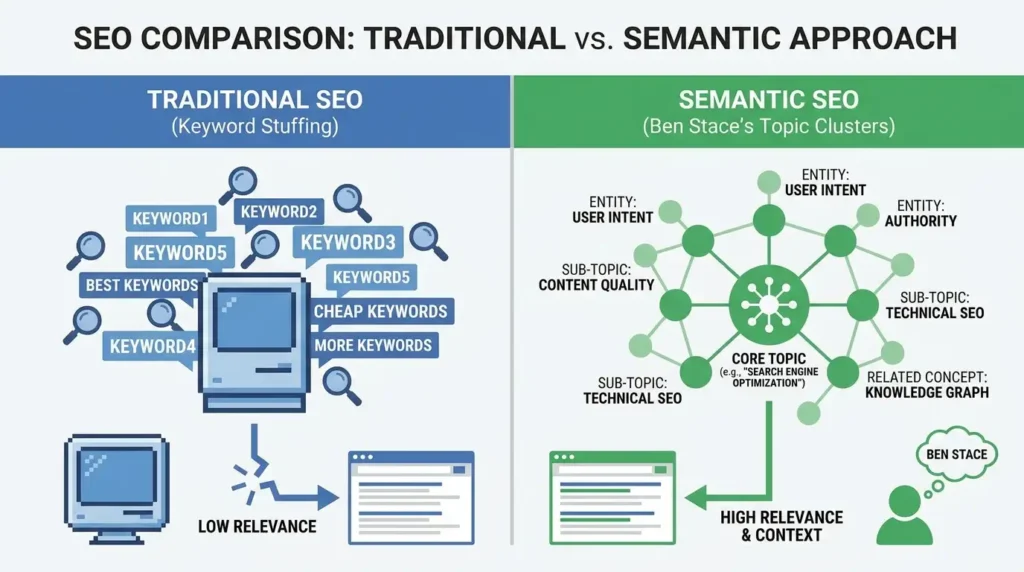
Table of Contents
Understanding the Ben Stace Semantic SEO Writing Tool
The Ben Stace semantic SEO writing tool is not just another content optimization platform—it’s a complete system for building topical authority from the ground up. While most SEO tools tell you which keywords to use, this writing tool shows you how to structure entire content ecosystems that search engines reward.
The core difference? Traditional tools help you rank for individual keywords. Ben Stace’s approach helps you dominate entire topics.
Here’s how the semantic SEO writing tool works in practice. Instead of starting with a single keyword like “coffee brewing,” the tool maps out the complete semantic network around coffee. It identifies essential entities like Arabica and Robusta varieties, origin countries like Ethiopia and Colombia, brewing equipment like V60 and Chemex, and coffee experts like James Hoffmann.
By naturally mentioning these entities in context, your content signals genuine expertise rather than just keyword repetition. The writing tool analyzes top-ranking competitors, extracts the semantic terms they’re using, and provides live content scoring to help you avoid over-optimization while ensuring comprehensive coverage.
Key Features of the Ben Stace Semantic SEO Writing Tool.
Entity Recognition and Analysis
The tool automatically identifies relevant entities that search engines recognize as important for your topic. This goes far beyond basic keyword research—it understands relationships between concepts and helps you build semantic depth naturally.
Live Content Scoring
As you write, the semantic SEO writing tool provides real-time feedback on how well your content covers the topic. It measures semantic completeness without encouraging keyword stuffing, helping you find the sweet spot between optimization and natural language.
Topical Cluster Generation
One of the most powerful features is automatic topical cluster mapping. The tool shows you exactly how to organize pillar content and supporting articles to build maximum topical authority in your niche.
Search Intent Alignment
The Ben Stace semantic SEO writing tool analyzes user intent behind search queries, ensuring your content matches what people are actually looking for when they type specific phrases into Google.

How Does Ben Stace Do Semantic SEO? The Complete Strategy
Many people ask, “How does Ben Stace do semantic SEO differently than everyone else?” The answer lies in his systematic, science-based approach to content planning and creation.
Ben’s methodology starts with deep topical research using semantic analysis tools. He doesn’t just identify keywords—he maps entire knowledge domains. Using tools like his own semantic SEO writing platform, MarketMuse, InLinks, and Google’s NLP API, he analyzes how words relate conceptually to ensure content mirrors actual human search behavior.
The Ben Stace Topical Authority SEO Framework
Building topical authority is the cornerstone of Ben Stace’s semantic SEO strategy. Instead of creating random blog posts hoping they’ll rank, he develops hub-and-spoke content systems.
Here’s the framework:
Step 1: Create a Comprehensive Pillar Page
The pillar page becomes your topical hub—a single, in-depth resource covering your main topic from every angle. For example, if your topic is “home coffee brewing,” your pillar page would comprehensively address equipment, techniques, coffee types, and common mistakes.
Step 2: Develop Supporting Cluster Content
Each cluster article dives deep into one specific aspect mentioned in your pillar page. These might include “French press vs pour-over methods,” “understanding coffee grind sizes,” “optimal water temperature for different roasts,” and so on.
Step 3: Strategic Internal Linking
Every cluster page links back to the pillar page and to other relevant cluster articles. The pillar page links to all supporting content. This creates a semantic content network that search engines recognize as deep expertise.
Step 4: Entity Optimization Throughout
Each piece naturally incorporates relevant entities—people, places, products, concepts—that search engines associate with your topic. This builds semantic relationships that go far beyond simple keyword matching.
This systematic approach is why Ben Stace’s clients consistently achieve first-page rankings even in brutally competitive markets.

Ben Stace Semantic SEO Consultancy Services: What You Get
When businesses hire Ben Stace for semantic SEO consultancy services, they’re not just getting generic advice—they’re getting a battle-tested system that’s been refined over decades of hands-on experience.
The Ben Stace semantic SEO consultant approach focuses on building sustainable, long-term search visibility rather than quick wins that disappear after the next algorithm update. His consultancy packages typically include:
Comprehensive Topical Audits
Ben analyzes your existing content to identify gaps in your topical coverage and opportunities to build semantic authority. This audit reveals exactly where your content is weak and how competitors are outperforming you.
Custom Topical Map Development
Using his expertise as a topical map expert, Ben creates detailed content roadmaps showing exactly what content you need to create, how it should connect, and which entities to emphasize.
Semantic Content Strategy
The consultancy includes hands-on training in using the Ben Stace semantic SEO writing tool effectively. You’ll learn how to analyze content semantically, identify entity opportunities, and structure articles for maximum topical relevance.
Ongoing Optimization Support
Semantic SEO isn’t a one-time project—it requires continuous refinement as search algorithms evolve. Ben Stace’s consultancy services include ongoing support to keep your content performing at peak levels.
Real Ben Stace Semantic SEO Case Studies
Theory is nice, but results speak louder. The Ben Stace semantic SEO case studies demonstrate exactly what’s possible when you build topical authority the right way.
Case Study 1: E-Commerce Winter Apparel Success
An online clothing retailer in New York struggled to rank for competitive fashion terms. Ben Stace used his semantic SEO writing tool to create a topical cluster around “winter jackets,” incorporating semantic terms like “insulated parkas,” “waterproof outerwear,” and “down vs synthetic fill.”
The result? Page-one rankings for 22 commercial keywords within four months, with organic traffic increasing 187% in the first 90 days.
Case Study 2: HVAC Company Dominates Local Search
A heating and cooling company wanted to dominate their local market but faced fierce competition. Using Ben Stace’s topical authority SEO framework, they built comprehensive content clusters around HVAC topics specific to their region.
The outcome was dramatic: 123% increase in organic traffic, featured snippets for multiple high-intent queries, and a 65% boost in qualified leads directly from organic search.
Case Study 3: Dental Practice Featured Snippet Takeover
A dental practice wanted to establish authority for complex procedures. By following Ben Stace’s semantic content optimization strategy, they created pillar content addressing every aspect of dental care, supported by detailed cluster articles optimized for semantic relevance.
Within six months, they secured featured snippets for 14 different queries and became the go-to resource in their region, with appointment requests tripling from organic search alone.
These case studies prove that semantic SEO isn’t just theory—it’s a practical system that delivers measurable business results when implemented correctly.

Ben Stace Semantic SEO Speaker: Learning from the Expert
Ben Stace isn’t just a consultant—he’s also a sought-after semantic SEO speaker who shares his knowledge at major industry events. His speaking engagements have included prestigious conferences like CMSEO, Ubud SEO & Business, and the Semantic SEO Mastery meet-up in Kusadasi, Turkey.
What makes his presentations valuable is that he doesn’t just share surface-level tips. Ben dives deep into the technical aspects of how search engines process semantic relationships while keeping the content accessible enough for business owners to implement.
Attending a Ben Stace speaking event gives you direct access to strategies that most SEO professionals won’t discover for years. He shares real data from actual client campaigns, demonstrates his semantic SEO writing tool in action, and answers specific questions about topical authority building.
If you can’t attend his events in person, many of his key insights have been shared through online webinars and industry publications, making his expertise accessible to marketers worldwide.
How to Write Semantic SEO Content Like Ben Stace
Learning how to write semantic SEO content using Ben Stace’s methodology doesn’t require expensive tools or technical expertise. Here’s the practical framework you can start using today:
Start with Comprehensive Topic Research
Before writing a single word, map out your complete topic. Use semantic analysis tools to identify all related subtopics, entities, and questions people ask. Don’t just focus on high-volume keywords—understand the entire semantic landscape.
Write for Humans First, Optimize Second
Ben Stace emphasizes that semantic content must read naturally. Write your first draft focusing purely on being helpful and comprehensive. Then refine it using semantic SEO principles without sacrificing readability.
Incorporate Entities Naturally
Mention relevant people, places, products, and concepts in context. If you’re writing about coffee, naturally reference specific coffee origins, roasting methods, and industry experts. The key word is “naturally”—forced entity mentions hurt more than they help.
Structure Content for Semantic Clarity
Use clear headings that reflect semantic relationships. Your H2s and H3s should map out the topic logically, helping both readers and search engines understand how concepts connect.
Build Internal Semantic Networks
Every article should link to related content on your site using descriptive anchor text. This creates the semantic content networks that search engines reward with higher rankings.
The Ben Stace Approach to Topical Mapping
As a recognized topical map expert, Ben Stace has developed a systematic approach to content planning that eliminates guesswork. His topical mapping methodology helps businesses identify exactly what content they need to create to build comprehensive topical authority.
A topical map is essentially a visual blueprint showing how all your content pieces connect around central themes. Instead of randomly publishing blog posts, you strategically create content that reinforces your expertise in specific knowledge domains.
Ben’s topical mapping process involves:
Domain Analysis: Understanding your business’s core expertise areas and identifying which topics offer the best opportunities for ranking.
Entity Identification: Mapping out all relevant entities associated with each topic—people, products, concepts, locations—that search engines recognize as important.
Content Gap Analysis: Comparing your existing content against what’s needed to establish complete topical coverage, revealing opportunities competitors are missing.
Strategic Content Sequencing: Determining the optimal order for content creation, ensuring foundational pillar content is established before building supporting cluster articles.
This methodical approach is why Ben Stace’s clients achieve faster results with less content than competitors who publish randomly.

Why Semantic SEO Matters More Than Ever in 2026
The search landscape has fundamentally changed. Google’s algorithms now use advanced natural language processing through technologies like BERT and MUM, which understand context and meaning far better than ever before.
This means the old tricks—keyword density, exact-match domains, buying links—don’t just fail to work anymore. They can actually hurt your rankings.
Semantic SEO, as taught by Ben Stace, aligns perfectly with how modern search engines actually work. When you build genuine topical authority through comprehensive, entity-optimized content, you’re giving Google exactly what it wants: resources that truly help users understand complex topics.
The benefits extend beyond just rankings. Semantic content naturally:
– Answers multiple related queries, increasing your visibility across numerous searches
– Keeps visitors on your site longer because it’s more comprehensive and valuable
– Earns natural backlinks from other sites that recognize your authority
– Performs better during algorithm updates because it’s built on fundamental search principles
Hire Ben Stace for Semantic SEO: Is It Worth It?
If you’re considering whether to hire Ben Stace for semantic SEO consulting, here’s what you need to know.
Ben’s approach isn’t for businesses looking for quick fixes or overnight success. His semantic SEO methodology requires commitment to creating quality content and building genuine expertise in your field. However, if you’re willing to invest in doing SEO the right way, the results are transformative.
Working with Ben Stace or using his semantic SEO writing tool gives you a proven framework rather than leaving you to guess what might work. You’re not just getting advice—you’re getting a systematic approach refined through years of testing across thousands of websites.
The Ben Stace semantic SEO testimonials from past clients consistently highlight three key benefits:
1. Sustainable Rankings: Unlike tactics that work temporarily, semantic SEO builds lasting authority that survives algorithm updates.
2. Comprehensive Strategy: You receive complete topical maps and content plans rather than vague recommendations.
3. Measurable Results: The semantic approach produces clear metrics—higher rankings, increased traffic, better conversion rates—that directly impact your business.
For businesses serious about dominating their niche through search, investing in Ben Stace’s expertise or implementing his semantic SEO writing tool framework delivers ROI that far exceeds the initial investment.
Semantic SEO Tools Used by Ben Stace
While the Ben Stace semantic SEO writing tool is his signature platform, he recommends several complementary tools for comprehensive semantic optimization:
MarketMuse: Excellent for topic and entity research, identifying semantic relationships and content gaps automatically.
InLinks: Specializes in entity optimization and internal linking opportunities based on semantic relationships.
Google’s NLP API: Provides direct insight into how Google processes language and identifies entities in your content.
SEMrush and Ahrefs: Valuable for keyword clustering, competitor analysis, and tracking search intent patterns.
The key is using these tools strategically rather than letting them dictate your content. Ben Stace emphasizes that tools should inform your decisions, not make them for you. Human understanding of your topic and audience must guide the process.
The Future of Semantic SEO According to Ben Stace
Looking ahead, Ben Stace predicts that semantic SEO will become even more critical as artificial intelligence increasingly powers search algorithms. The shift toward understanding user intent, context, and comprehensive topic coverage will only accelerate.
Search engines are moving toward rewarding genuine expertise and authority rather than optimization tricks. This means businesses that build real topical authority now will have enormous advantages over competitors still focused on outdated tactics.
Ben’s advice for future-proofing your SEO is straightforward: focus on becoming the best resource on your topic, not the most optimized for specific keywords. Build comprehensive content ecosystems using semantic principles, establish clear entity relationships, and consistently demonstrate deep knowledge of your subject matter.
The businesses that follow this approach won’t just survive future algorithm updates—they’ll thrive while competitors scramble to understand what changed.
Getting Started with Ben Stace Semantic SEO Methods
You don’t need to hire an expensive consultant to start benefiting from semantic SEO. Here’s your action plan for implementing Ben Stace’s methodology:
Week 1-2: Conduct Topical Research
Identify your core expertise areas and map out comprehensive topics you can realistically become an authority on. Use semantic analysis tools to understand the full scope of each topic.
Week 3-4: Create Your First Topical Map
Choose one topic and develop a complete topical map showing your pillar page and all supporting cluster content. Don’t start writing yet—plan the entire structure first.
Month 2: Build Your Pillar Content
Create your first comprehensive pillar page covering your topic from every relevant angle. Aim for genuine depth, incorporating entities naturally and addressing all major subtopics.
Month 3-6: Develop Cluster Content
Systematically create supporting articles, each diving deep into one aspect of your pillar topic. Implement strategic internal linking from the start.
Ongoing: Refine and Expand
Continuously improve existing content based on performance data and expand your topical coverage as your expertise grows.
This methodical approach mirrors how Ben Stace builds topical authority for clients, adapted for self-implementation.

Conclusion: Building Lasting Search Success with Semantic SEO
The era of quick SEO tricks and keyword manipulation is over. Modern search success belongs to businesses that build genuine topical authority through comprehensive, semantically optimized content.
Ben Stace has proven through hundreds of successful client campaigns that semantic SEO isn’t just effective—it’s the only sustainable approach to achieving first-page rankings in competitive markets. His semantic SEO writing tool and topical authority framework provide a clear roadmap for businesses ready to dominate their niches.
Whether you choose to hire Ben Stace as a semantic SEO consultant, invest in his writing tool, or simply implement his publicly shared methodologies, the core principle remains the same: give search engines what they want by becoming the best resource on your topic.
The question isn’t whether semantic SEO works—the case studies prove it does. The question is whether you’re ready to invest in building real authority instead of chasing temporary ranking tricks.
Start small with one topical map, create genuinely helpful pillar content, and build your semantic content network systematically. The results won’t come overnight, but they’ll be worth the wait—and they’ll last far longer than any shortcut ever could.
FAQs
-
How is Ben Stace connected to Koray Tugberk?
Ben Stace and Koray Tugberk Gubur are both recognized leaders in the semantic SEO community who share similar philosophies about topical authority and entity optimization. They have collaborated at SEO conferences and workshops, particularly at semantic SEO focused events in Europe and Turkey. Both experts emphasize building genuine expertise through comprehensive content rather than keyword manipulation. While they work independently, they frequently reference each other’s work and have contributed to advancing semantic SEO methodologies within the digital marketing industry.
-
What is Koray Tugberk Gubur’s relationship with Ben Stace?
Koray Tugberk Gubur and Ben Stace maintain a professional relationship as fellow thought leaders in semantic SEO. They have appeared together at industry events like the Semantic SEO Mastery meet-up in Kusadasi, Turkey, where both shared insights on topical mapping and entity optimization. Their relationship is characterized by mutual respect and knowledge sharing rather than formal partnership. Both experts have contributed to developing the semantic SEO field, with Koray focusing more on technical entity SEO and Ben emphasizing practical topical authority frameworks. They occasionally reference each other’s research in their teachings and consultancy work.
-
Does Ben Stace speak at SEO events?
Yes, Ben Stace regularly speaks at major SEO conferences and events worldwide. He has been a featured speaker at CMSEO, Ubud SEO & Business conferences, and the Semantic SEO Mastery meet-up in Kusadasi, Turkey. His presentations typically cover advanced topics including semantic content networks, topical mapping frameworks, and entity optimization strategies. Ben Stace’s speaking style focuses on practical, actionable insights rather than theoretical concepts, making his sessions highly valuable for both agencies and in-house SEO teams looking to implement semantic strategies effectively.
-
What is Ben Stace an expert in?
Ben Stace is primarily recognized as an expert in semantic SEO, topical authority building, and entity optimization. His expertise extends to developing comprehensive content strategies using topical mapping methodologies, creating semantic content networks that rank across multiple related queries, and leveraging natural language processing insights to align content with modern search algorithms. Beyond semantic SEO, Ben has deep knowledge in technical SEO, local search optimization, and building sustainable ranking strategies across competitive niches including health, technology, gaming, and education sectors.
-
Who is Ben Stace and why is he considered a semantic SEO expert?
Ben Stace is a Melbourne-based SEO consultant who has been ranking websites successfully since 1998. He’s considered a semantic SEO expert because he pioneered practical frameworks for building topical authority through entity-optimized content at a time when most SEO professionals still focused purely on keywords. His background in applied science gave him unique analytical capabilities to understand how search engines process semantic relationships. Ben developed the Ben Stace Semantic SEO Writing Tool and created systematic methodologies for topical mapping that have helped thousands of websites achieve sustainable first-page rankings.
-
What makes Ben Stace’s semantic SEO approach different?
Ben Stace’s approach differs from traditional SEO in several fundamental ways. First, he focuses on building comprehensive topical coverage rather than targeting individual keywords. Second, his methodology emphasizes entity optimization and semantic relationships that mirror how modern search algorithms actually process information. Third, he provides systematic frameworks like topical mapping that eliminate guesswork from content planning. Finally, his semantic SEO writing tool analyzes content for semantic completeness rather than just keyword density, helping create naturally optimized content that performs well long-term.
-
Can small businesses benefit from Ben Stace’s semantic SEO methods?
Absolutely. While Ben Stace works with large enterprises, his semantic SEO methodology is especially powerful for small businesses competing against larger competitors. By building genuine topical authority in focused niches, small businesses can outrank bigger companies that spread their content too thin. The key is selecting specific topics where you can become a recognized authority rather than trying to compete across broad categories. Ben’s topical mapping approach helps small businesses identify these opportunities and build comprehensive content systematically within realistic budgets.