



How to Boost AI Overview Visibility AEO
Learning how to boost AI Overview visibility AEO is now essential for brands that want to appear inside AI-generated answers, not just traditional search results. The key is to create clear, structured, expert-driven content that directly answers real user questions while making it easy for AI systems to understand and trust your information. By combining strong E-E-A-T signals, technical optimization, and visibility tracking, brands can increase their chances of being cited in AI Overviews across platforms like Google, ChatGPT, and Perplexity. This shift means success is no longer just about rankings, but about becoming a trusted source AI chooses to reference.
AI Visibility Strategy Overview
| Area | Focus | Impact on AI Overviews |
| Content Quality | Expert, in-depth answers | Higher chance of AI citation |
| Content Structure | Headings, FAQs, tables | Easier AI extraction |
| E-E-A-T Signals | Expertise and credibility | Stronger authority |
| Brand Mentions | External trust signals | Increased AI trust |
| Technical SEO | Schema & crawlability | Better AI access |
| Visibility Tracking | Monitoring AI citations | Data-driven optimization |
What Is AI Visibility?
AI visibility refers to how often and how effectively your brand, website, or content appears inside AI-generated responses. Instead of simply listing blue links, AI systems synthesize information and provide direct answers, often citing sources they consider reliable. When your brand is mentioned, summarized, or directly cited in these responses, your AI visibility grows.
This represents a major shift from traditional SEO. Instead of competing only for ranking positions, brands must now compete for inclusion in AI answers themselves. Being cited by AI builds authority, recognition, and trust in ways that standard organic listings cannot.
Why AI Visibility Matters for Modern AEO
AI visibility is becoming more important as user behavior moves toward conversational and AI-assisted search. Many users now ask full questions instead of typing short keywords, and AI systems respond with summarized answers instead of link lists. If your brand is not included in these answers, you may lose exposure even if your site ranks well in traditional results.
Strong AI visibility helps establish topical authority and brand expertise. When AI systems repeatedly cite your content, it reinforces your reputation as a reliable source. Even in zero-click environments, this can influence purchasing decisions and drive high-intent traffic when users choose to explore cited sources.
What Makes AI Visibility Different from Traditional Search
Traditional search engines focus heavily on keyword relevance, backlinks, and page authority. AI systems, however, prioritize factual clarity, contextual relevance, and direct answer quality. They are designed to solve user questions immediately rather than guide users through multiple links.
This means content must be written in a way that answers questions clearly, logically, and accurately. AI models also rely more heavily on structured data and well-organized content, making formatting and technical accessibility more important than ever.
Key Factors That Influence AI Overview Visibility
AI Overviews don’t pull information randomly. AI systems evaluate multiple trust and relevance signals before selecting which sources to cite.
Content Quality and Topical Authority
AI models prefer content that is accurate, in-depth, and clearly explained. Pages that fully cover a topic, including definitions, context, and supporting details, are more likely to be referenced. Demonstrating real expertise, experience, and credibility increases the chance of AI citations.
Search Intent Alignment
AI engines aim to solve the entire user problem, not just match keywords. Content that anticipates follow-up questions, related concerns, and deeper explanations performs better. Holistic coverage signals to AI that your page is a reliable primary source.
Brand Trust and External Mentions
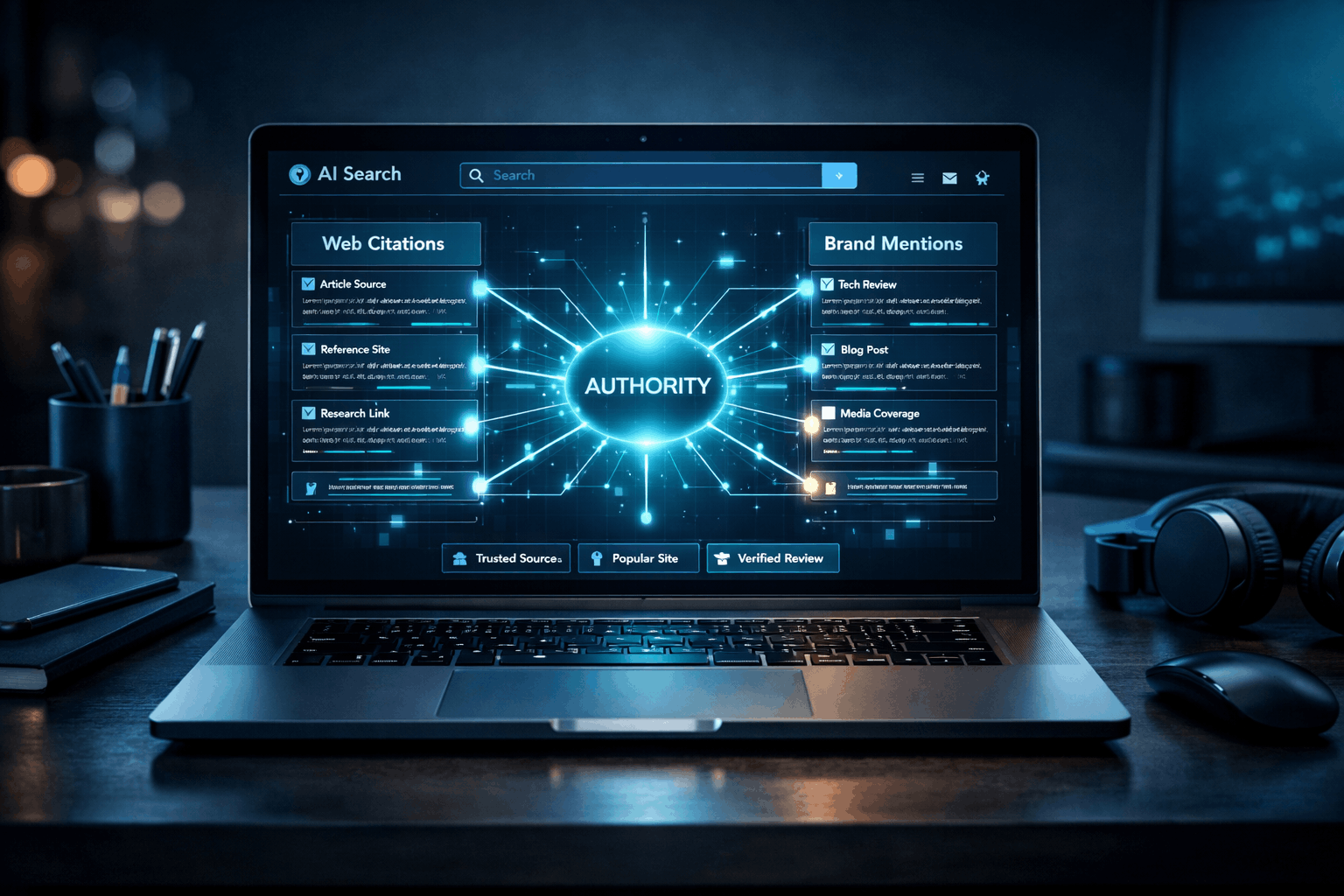
Mentions from reputable websites act like authority signals. If trusted publications, forums, or industry platforms reference your brand, AI systems are more likely to treat your content as credible.
Content Structure and Machine Readability
AI systems extract information more easily from structured content. Clear headings, short definitions, bullet points, FAQs, and comparison tables make it easier for AI to summarize your page accurately.
Technical Accessibility
Schema markup, clean HTML structure, and strong internal linking help AI crawlers understand your content. Technical errors or blocked resources can prevent AI systems from accessing important information.
How to Measure Your AI Visibility
AI visibility is not about rankings alone; it’s about whether AI engines actually mention or cite your brand.
Key AI Visibility Metrics
- AI answer inclusion rate
- Brand mention frequency
- Citation presence (linked or referenced sources)
- Share of voice in AI-generated responses
These metrics show whether AI considers your content trustworthy enough to use in answers.
Why Manual Tracking Doesn’t Work
AI responses change based on location, user behavior, and query variations. Manual checking is inconsistent and impossible to scale. This is why dedicated AI visibility tools are necessary.
AI Visibility Measurement Tools (Detailed Breakdown)
Different tools focus on different aspects of AI search performance. Here’s a clearer comparison:
| Tool Name | Core Features | Main Purpose | Best For |
| ZipTie | AI Overview tracking, visibility score, query-level AI citation data, competitor AI share-of-voice | Measures how often your brand appears in AI-generated answers | SEO & AEO teams focused on AI Overview optimization |
| Profound | Multi-language AI tracking, real AI answer capture, competitor comparison, traffic impact correlation | Connects AI mentions with real performance changes | Brands targeting international AI visibility |
| Evertune | Sentiment tracking, AI brand perception monitoring, trend analysis | Understands how AI portrays your brand | Reputation & brand monitoring teams |
| Peec AI | AI citation tracking across LLMs, brand mention monitoring | Tracks presence in AI assistants beyond search | Early-stage AI visibility tracking |
| AthenaHQ (AI-focused modules) | Entity tracking, authority signals, structured data monitoring | Improves entity recognition in AI systems | Technical SEO & entity optimization teams |
Interpreting AI Mentions and Citations
Not every AI mention delivers the same SEO or AEO value. Understanding the quality, context, and type of citation helps brands evaluate how strongly AI systems trust their content and authority.
Direct Citations vs General Mentions
A clearly attributed or linked citation holds far more value than a simple brand mention. Direct citations indicate that AI systems used your content as a trusted source while generating the answer. General mentions may build awareness, but don’t always pass strong authority signals.
Accuracy of Representation
It’s important to review how AI summarizes your content in its answers. If the information is misinterpreted or incomplete, it may mean your page lacks clarity or structured context. Improving definitions, headings, and explanations can help AI better understand your message.
Sentiment and Context
Positive or neutral mentions strengthen brand authority in AI-generated answers. Negative framing or misleading context, however, can weaken trust and perception. Monitoring sentiment helps brands adjust messaging, clarify positioning, and improve how AI systems interpret their content.
Content Strategies to Boost AI Overview Visibility (AEO)
Strong content is the foundation of AI Overview visibility. AI systems favor material that is easy to extract, clearly structured, and aligned with real user intent rather than just keyword placement.
Answer-First Content Structure
Begin sections with a short, direct answer before expanding into deeper explanations. This format helps AI quickly extract summary-level information while still recognizing depth and expertise. It also improves readability for users who want quick insights.
Build Topic Clusters
Create a central guide supported by related articles covering subtopics in detail. Interlinking these pages helps AI understand topical authority and content relationships. Well-connected topic clusters signal comprehensive expertise within a subject area.
Use Structured Elements
Adding FAQs, bullet lists, step-by-step guides, and comparison tables improves machine readability. These formats make it easier for AI systems to pull accurate snippets and structured summaries. Organized formatting also enhances user experience and engagement.
Strengthen Off-Site Authority
AI systems rely on external trust signals similar to backlinks in SEO. Digital PR, expert contributions, and reputable site mentions increase perceived credibility. The more your brand is referenced by trusted sources, the more likely AI is to cite it.
Technical Strategies to Improve AI Visibility
Technical optimization ensures AI systems can access, interpret, and trust your content without obstacles. Even strong content can be overlooked if technical signals are weak or inconsistent.
Implement Structured Data
Schema markup helps define entities like articles, organizations, products, and FAQs clearly. This structured format makes it easier for AI systems to understand relationships and context. Proper schema increases the likelihood of accurate AI citations.
Optimize Crawlability
Fast-loading pages, mobile responsiveness, and clean code improve both user experience and AI accessibility. Broken links or blocked resources can prevent AI systems from fully understanding your content. Technical health supports consistent AI visibility.
Maintain Clean Site Architecture
Logical URL structures and strong internal linking help AI systems map content relationships. A well-organized site makes it easier for crawlers to discover important pages. Clear hierarchy strengthens topical authority signals for AI-driven search.
Continuous Optimization and Monitoring
AI search changes constantly. New competitors appear, AI models update, and answer formats evolve. Regular monitoring of AI Overview triggers, citation rates, and competitor visibility helps refine your AEO strategy. Updating content with fresh insights and expanded coverage keeps your brand relevant and trusted by AI systems over time.
Our Practical Experience and AEO Strategy
From our hands-on experience, focusing on AI Overview optimization rather than only traditional rankings made a noticeable difference in visibility. We used an AI-first content strategy built around answer-focused pages, stronger topical coverage, and structured formatting to improve extractability. To track progress, we relied on ZipTie, which helped us see exactly where our content was being cited in AI-generated answers and where competitors were outperforming us. Its detailed query insights and automated alerts allowed us to quickly update weak pages and capture missed opportunities. This combination of the right strategy and the right tool directly improved our AI search presence and citation rate.
Conclusion
Understanding how to boost AI Overview visibility AEO requires a shift from traditional ranking strategies to authority-driven, structured, and measurable optimization. By focusing on expert content, strong technical foundations, and consistent visibility tracking, brands can increase their chances of being cited in AI-generated answers. As AI continues reshaping search behavior, those who adapt early will gain stronger visibility, higher trust, and long-term competitive advantage.
FAQs
What is AI Overview visibility?
AI Overview visibility measures how often and where your content or brand is cited in AI-generated search answers. High visibility indicates AI trusts your content as a source.
Why is AI visibility important for AEO?
AI visibility ensures your brand is recognized in AI-generated answers, increasing authority, mentions, and user trust, beyond traditional search engine rankings.
How do AI systems choose sources?
AI systems prioritize content based on quality, authority, accuracy, topical relevance, and structured formatting, along with external citations or mentions.
How can I track my AI visibility?
Using AI visibility tools like ZipTie, Conductor, or Geneo, you can monitor mentions, citations, and inclusion rates across multiple AI search engines.
What strategies improve AI Overview visibility?
Focus on structured content, clear answers, FAQs, topic clusters, E-E-A-T signals, and external brand mentions to enhance AI recognition and citations.
How often should I monitor AI citations?
Regular monitoring is crucial; automated alerts or weekly checks ensure you respond quickly to AI updates, content shifts, or competitor gains.
Which tools help with AI search optimization?
Tools like ZipTie, Conductor, Geneo, Peec AI, and Rankscale provide visibility tracking, competitor analysis, query monitoring, and performance reports.
How does content structure affect AI visibility?
Well-structured headings, tables, FAQs, and definitional content help AI extract answers accurately and increase the likelihood of being cited.
Can competitor tracking boost AI visibility?
Yes, analyzing where competitors appear in AI Overviews helps identify gaps and opportunities, allowing you to optimize content for high-value queries.
What metrics indicate successful AI visibility?
Key metrics include AI mentions, direct citations, answer inclusion rates, sentiment of references, and comparative share-of-voice versus competitors.