




Introduction
Geo trackers are essential tools used to measure how often a brand appears inside AI-generated answers across modern search platforms. As AI systems like ChatGPT and Google AI Overviews influence buying decisions, geo business visibility is becoming more important than traditional rankings. These tools monitor citations, mentions, and competitive presence within generative responses rather than blue-link positions. The best geo visibility tracking tool helps brands understand where they stand and how to improve their geo-ai visibility. Without geo trackers, businesses risk losing influence in AI-driven discovery experiences.
What Are Geo Trackers?
Geo trackers are specialized platforms where AI-generated answers are analyzed to determine how frequently a brand appears in citations. Instead of monitoring page positions, visibility inside conversational responses across multiple AI engines is measured and compared. These tools are considered the best generative engine optimization GEO trackers when citation data, sentiment signals, and share of voice are combined.
How Geo Tracking Differs from Traditional SEO Tracking
Traditional rank tracking is focused on link positions, while GEO tracking is centered on brand presence inside AI-generated summaries. Mentions, citations, and recommendation frequency are evaluated rather than clicks or impressions from search engine results pages. This shift makes geo visibility tracking tools essential in AI-driven discovery journeys.
Why Geo Business Visibility Matters
Customer decisions are increasingly influenced by AI-curated answers where only a few brands are presented as trusted sources. If your business is excluded, market authority can be reduced without any noticeable drop in traditional rankings. Geo trackers ensure geo business visibility is continuously monitored before competitive gaps widen.
Best Geo Trackers for Monitoring AI Visibility
The platforms below are widely considered among the best generative engine optimization GEO trackers for monitoring AI brand presence.
1. Geoptie
In Geoptie, AI visibility across ChatGPT, Gemini, Claude, and Perplexity is tracked with prompt-level analysis and citation reporting. Competitive benchmarking and geographic segmentation are supported for brands seeking deep GEO performance insights.
2. Profound
In Profound AI, enterprise-scale AI mentions tracking is provided with strong competitive comparison and brand sentiment monitoring capabilities. Reporting depth is high, but optimization execution must be handled using external content tools.
3. Conductor
In Conductor, AI visibility insights are integrated with broader content and SEO workflows, allowing optimization actions to be connected with performance data. This platform is favored by large teams needing unified digital visibility management.
4. Semrush
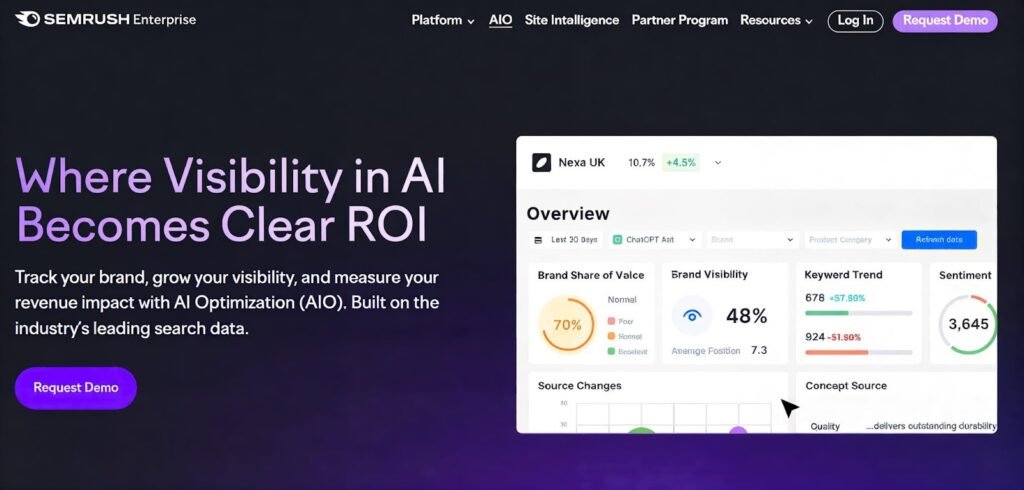
In Semrush, AI Overview tracking is offered alongside traditional SEO tools, providing combined performance visibility across search environments. GEO-specific analysis is more limited compared with dedicated geo trackers.
5. Writesonic
In Writesonic, content optimization and AI-assisted writing are combined with basic AI visibility monitoring for faster execution cycles. Tracking depth is lighter, but publishing workflows are accelerated for content teams.
6. Athena
In Athena, citation behavior and structural content influence are analyzed in detail, helping teams understand why AI engines select certain sources. The platform is suited for advanced users requiring deep analytical insights.

7. Surfer SEO
In Surfer SEO, content structure optimization is supported with AI-influenced scoring signals that improve answer extraction potential. Dedicated GEO tracking is limited, but optimization guidance remains useful.

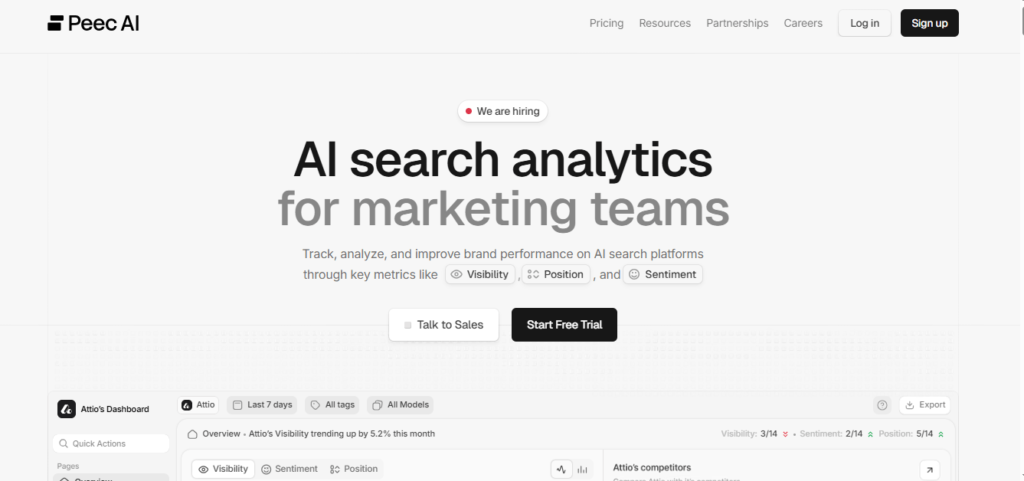
8. Peec AI
In Peec AI, actionable recommendations are generated from AI visibility data, making GEO improvements easier for marketing teams. Coverage across AI engines is narrower than that of enterprise-level geo trackers.
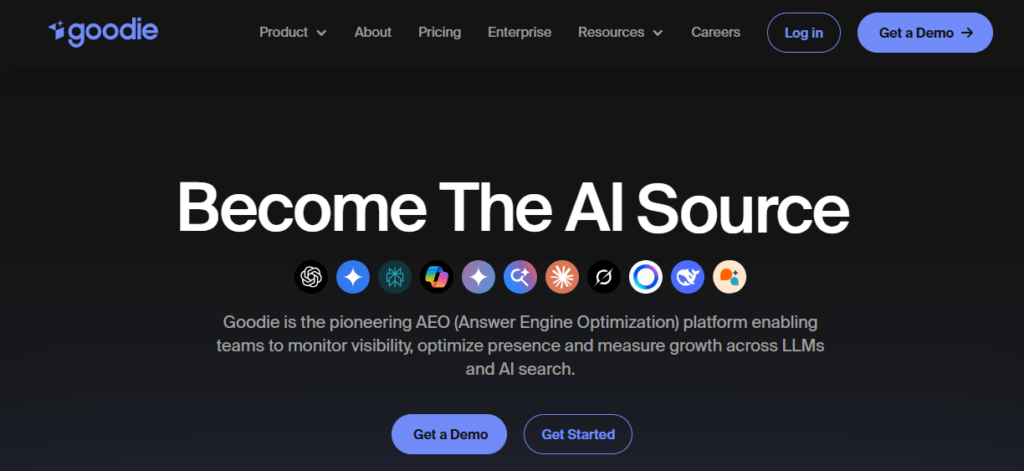
9. Goodie
In Goodie, entry-level AI visibility monitoring is provided through simplified dashboards designed for smaller organizations. Advanced analytics and competitive depth are limited compared to larger platforms.
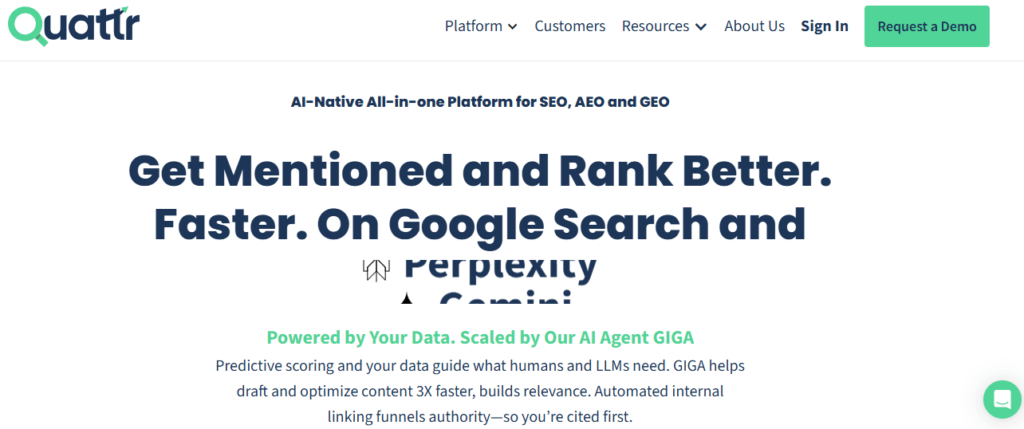
10. Quattr
In Quattr, automation-driven optimization workflows are supported while AI visibility signals are integrated into broader performance tracking systems. Citation-level diagnostics are less detailed than specialized GEO tools.
Core Metrics Measured by Geo Trackers
Modern platforms are built to evaluate multiple data points that indicate how AI systems perceive and present your brand. These insights are used to guide optimization strategies that improve citation likelihood and AI recommendation strength.
Brand Mention Frequency
The number of times a brand is referenced in AI-generated answers is measured across tracked prompts and topic clusters. Higher mention frequency signals stronger entity recognition by large language models operating in answer engines.
Citation and Source Inclusion
Whether your website is cited as a supporting source is recorded, since citations influence credibility within AI-generated explanations. These insights are central to identifying the best geo visibility tracking tool for authoritative content growth.
AI Share of Voice
Visibility is compared against competitors to show how often alternative brands are recommended for the same prompts. This metric helps prioritize content gaps where competitors dominate AI-generated recommendations.
Sentiment and Positioning
AI systems often describe brands using contextual language that shapes perception, trust, and expertise within responses. Geo trackers analyze whether mentions are positive, neutral, or negative across different AI platforms.
Geo Trackers Comparison Table
| Tool | Main Strength | Best For | Limitation |
| Geoptie | Cross-platform AI citation tracking | Brands focused on GEO visibility | Newer platform ecosystem |
| Profound | Enterprise AI mentions analytics | Large brands & benchmarking | Limited execution tools |
| Conductor | Unified SEO + AI visibility | Enterprise marketing teams | Custom pricing structure |
| Semrush | SEO suite with AI tracking | Existing Semrush users | Limited GEO depth |
| Writesonic | Content + AI optimization | Fast-moving content teams | Light tracking capabilities |
| Athena | Citation behavior insights | Data-driven enterprises | Steep learning curve |
| Surfer SEO | Content structure optimization | Writers & editors | Minimal AI monitoring |
| Peec AI | Actionable GEO suggestions | Marketing teams | Narrow AI platform range |
| Goodie | Beginner-friendly monitoring | Small businesses | Basic analytics only |
| Quattr | SEO + AI workflow automation | Technical SEO teams | Limited citation diagnostics |
Why Traditional Tools Cannot Measure GEO Visibility
Conventional SEO tools are designed for crawler-based rankings, while AI engines rely on retrieval and synthesis processes. Because AI answers are generated dynamically, rankings cannot reflect whether a brand is actually cited in responses.
AI Answers Replace Click-Based Journeys
Users are often satisfied with AI summaries, meaning website visits may never occur, even when influence is achieved. Geo trackers measure visibility in these zero-click environments, where geo-ai visibility determines brand exposure.
AI Outputs Change Frequently
AI responses vary depending on phrasing, user intent, and model updates, which makes single snapshots unreliable. Continuous sampling is performed by geo trackers to detect trends rather than isolated appearances.
How Geo Trackers Monitor AI Platforms
Effective GEO tracking requires structured monitoring across multiple answer engines where visibility patterns differ significantly. Each platform draws from distinct data sources, affecting how often your brand is referenced.
Cross-Platform Monitoring
Brand mentions are checked across ChatGPT, Gemini, Claude, Perplexity, and AI Overviews to avoid platform-specific blind spots. The best tools for monitoring geo-ai visibility provide dashboards combining all engines in one reporting interface.
Prompt-Based Tracking
Instead of keywords alone, natural-language prompts are tracked because AI systems respond to questions rather than simple search terms. This approach ensures that visibility is measured in realistic conversational scenarios.
Location-Based GEO Analysis
AI responses may vary by country, language, and regional data sources used during retrieval and synthesis processes. Advanced geo visibility tracking software includes geographic segmentation to identify regional performance differences.
How to Fix GEO Visibility Issues
When low visibility is detected, structured improvements can be made to increase citation potential within AI-generated answers. GEO optimization focuses on authority, clarity, and data-rich content.
Increase Fact Density
AI engines prefer content containing statistics, research references, and clearly verifiable statements that support answer accuracy. Citation likelihood is improved when authoritative data points are consistently included.
Improve Content Structure
Clear headings, summaries, and FAQ-style formatting are favored because AI systems extract well-structured sections more reliably. These updates are recommended by the best tools for improving geo-ai visibility.
Strengthen Entity Authority
Consistent brand information across trusted platforms is used by AI systems to validate entity credibility and expertise. External mentions, expert contributions, and structured schema markup support this authority-building process.
FAQS
What are geo trackers used for?
Geo trackers are used to measure how often brands appear inside AI-generated answers across multiple platforms. Visibility, citations, and AI recommendations are monitored rather than traditional rankings.
Are geo trackers safe to use?
Most platforms rely on query sampling and public AI outputs, so no direct access to private data is required. Reputable tools follow ethical data collection and reporting standards.
How do geo trackers improve AI visibility?
Visibility gaps are identified through citation tracking, then content and authority improvements are recommended. Structured optimization increases the likelihood of being referenced in AI answers.
What is geo business visibility?
Geo business visibility refers to how often a brand is mentioned or cited inside AI-generated responses. It reflects influence in AI-driven discovery rather than traditional search rankings.
How is GEO different from SEO?
SEO focuses on ranking positions, while GEO focuses on brand mentions and citations within AI-generated answers. GEO measures presence in summaries rather than link listings.
Can geo visibility issues be fixed?
Yes, improvements can be achieved by increasing factual depth, strengthening authority, and improving structured formatting. GEO strategies focus on citation-friendly content creation.
What is the best geo visibility tracking tool?
The best tool depends on your needs, but platforms with cross-engine monitoring and citation analytics are preferred. Enterprise teams often choose comprehensive GEO dashboards.
Do geo trackers monitor multiple AI platforms?
Yes, leading tools monitor ChatGPT, Gemini, Perplexity, Claude, and AI Overviews in one interface. Cross-platform data prevents blind spots in visibility analysis.
How often should GEO visibility be tracked?
AI responses change frequently, so continuous or weekly monitoring is recommended for accurate trend detection. Regular tracking ensures competitive shifts are identified early.
Are fast geo trackers important?
Fast geo trackers allow quicker detection of visibility drops and competitor gains in AI answers. Timely insights enable faster optimization actions and performance recovery.