



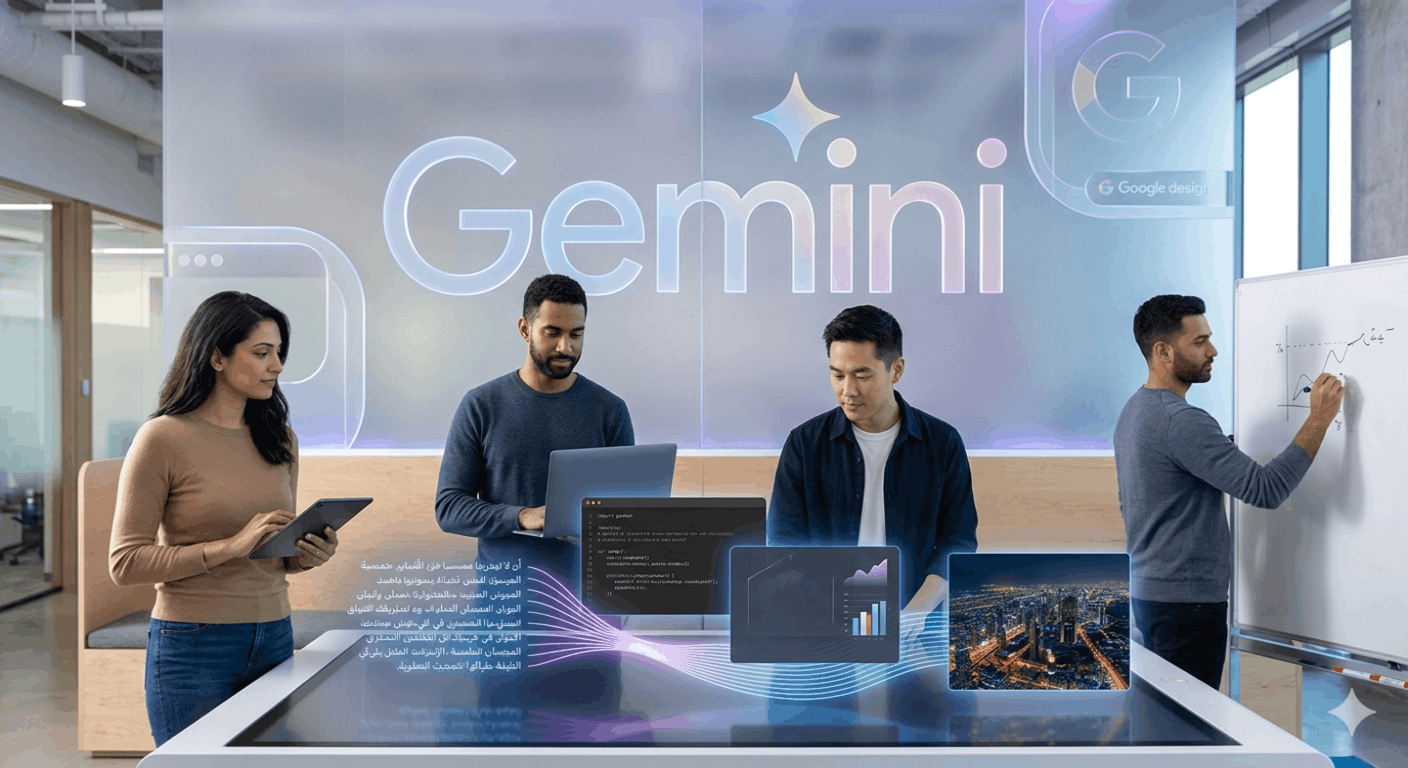
Introduction to GME AI (Gemini AI)
GME AI commonly refers to Google Gemini, which is an advanced multimodal AI system developed by Google. It is designed to process and generate text, images, and code while performing complex reasoning tasks. As a GME AI system, Gemini competes directly with models like ChatGPT in the artificial intelligence space. It is built using large-scale deep learning models trained on diverse datasets to understand context and intent. In 2026, Gemini AI is integrated into Google Search, Docs, and other tools, making it widely used for productivity and automation. Overall, GME AI plays a key role in modern AI applications, offering fast, accurate, and context-aware responses.
What Is GME AI?
Definition and Core Concept
GME AI refers to Google Gemini, a multimodal artificial intelligence system developed by Google. It is designed to process and generate different types of data, including text, images, code, and, in advanced versions, audio. Unlike earlier AI models that focused mainly on text, Gemini combines multiple data types into a single system, allowing it to understand context more effectively. This makes it more flexible and capable of handling complex real-world tasks.
Multimodal Capabilities
Gemini AI is built as a multimodal model, meaning it can work across different formats of information. It can analyze images, generate written responses, and assist with coding tasks within the same workflow. This ability allows it to connect visual and textual data, improving accuracy and contextual understanding. As a result, it can provide more detailed and relevant outputs compared to traditional AI systems.
Advanced Reasoning Ability
A key feature of GME AI is its ability to perform advanced reasoning. It can solve complex problems involving mathematics, logical analysis, and programming. The system uses large-scale neural networks and training data to identify patterns and generate structured solutions. This makes it suitable for both simple queries and highly technical tasks.
Real-World Understanding
Gemini AI is designed to go beyond basic responses by understanding real-world context and relationships. It uses Natural Language Processing (NLP) and deep learning to interpret user intent and deliver meaningful answers. This improves the quality of responses and makes interactions more natural and useful for users.
Key Features of Gemini AI
Multimodal Processing
Gemini AI can handle multiple types of input and output within a single system. It processes text, images, and code together, allowing users to perform complex tasks more efficiently. This integration improves productivity and enables more advanced applications across different industries.
Advanced Reasoning and Problem Solving
The model is capable of handling complex reasoning tasks, including coding assistance, data analysis, and logical problem solving. It provides structured and detailed responses based on context, making it useful for professionals, developers, and researchers.
Integration with Google Ecosystem
Gemini AI is deeply integrated into Google products such as Search, Docs, and Gmail. This integration allows users to access AI features directly within commonly used tools, improving workflow efficiency. It also enables real-time assistance across multiple platforms.
Real-Time AI Assistance
The system provides instant responses and suggestions based on user input. It supports automation of tasks such as writing, research, and data processing. This real-time capability makes it valuable for both individual users and businesses looking to improve efficiency.
Continuous Improvement and Updates
As part of Google’s AI ecosystem, Gemini is continuously updated with improved models and capabilities. This ensures better accuracy, enhanced reasoning, and improved performance over time, keeping it aligned with the latest advancements in artificial intelligence.
How Gemini AI Works
Large Language Models and Deep Learning
GME AI is powered by Google Gemini, which is built on large language models (LLMs) and deep learning architectures developed by Google. These models are trained on massive datasets containing text, code, and other data formats. The training process allows the system to learn language patterns, relationships, and contextual meaning, enabling it to generate accurate and human-like responses.
Data Training and Knowledge Learning
Gemini AI is trained on large-scale datasets to understand language structure, facts, and contextual relationships. This training helps the system recognize how words, phrases, and concepts are connected. As a result, it can process complex queries and provide relevant outputs based on learned knowledge.
Pattern Recognition Using Neural Networks
The system uses neural networks to identify patterns in data. These networks analyze input and match it with learned patterns from training. This allows Gemini AI to predict the most relevant response based on user queries, improving both accuracy and efficiency.
Context Understanding Through NLP
Natural Language Processing (NLP) is a core component of Gemini AI. It enables the system to understand user intent, context, and meaning behind queries. Instead of focusing only on keywords, Gemini interprets full sentences and relationships between ideas, which leads to more meaningful and accurate responses.
Response Generation and Output
Once the input is processed, Gemini generates responses based on probability, context, and learned data. It can produce text, code, and structured answers depending on the query. This process ensures that outputs are context-aware and aligned with user intent.
Multimodal Processing System
Gemini AI is designed as a multimodal system, meaning it can process different types of data simultaneously. It can combine text, images, and code within a single task. This capability improves its ability to handle complex queries that involve multiple formats of information.
Real-Time Processing and Interaction
Gemini AI operates in real time, allowing users to receive instant responses. This makes it suitable for applications such as search, content creation, and automation. Real-time processing improves productivity and enhances user experience across different platforms.
Gemini AI Uses
| Use Case | Description |
| Content Creation | Generates blogs, articles, and marketing content |
| Coding Support | Helps in writing and debugging code |
| Business Automation | Automates workflows and customer support |
| Education | Assists in learning and research |
Versions of Gemini AI
Gemini Nano
Gemini Nano is a lightweight version designed for mobile devices. It is optimized for efficiency and can run directly on-device in some cases. This allows faster processing and limited offline functionality, making it suitable for everyday tasks on smartphones.
Gemini Pro
Gemini Pro offers a balance between performance and speed. It is the most commonly used version and is integrated into many applications and services. It handles general tasks such as content creation, research, and coding assistance efficiently.
Gemini Ultra
Gemini Ultra is the most advanced version of the model. It is designed for complex reasoning, large-scale data processing, and enterprise-level applications. This version provides higher accuracy and deeper analytical capabilities compared to other versions.
Differences Between Versions
Each version of Gemini AI is designed for a specific use case. Nano focuses on mobile efficiency, Pro targets general usage, and Ultra handles advanced and enterprise-level tasks. This tiered structure allows users to choose the appropriate level of performance based on their needs.
Use Case-Based Deployment
Google deploys different versions of Gemini across its ecosystem depending on the application. For example, lightweight tasks may use Nano, while more complex queries in cloud-based systems use Pro or Ultra. This ensures optimal performance and resource usage.
Continuous Model Improvements
All versions of Gemini AI are regularly updated with improvements in accuracy, reasoning, and performance. These updates are part of Google’s ongoing AI development, ensuring that the system remains competitive and aligned with modern technological advancements.
Uses of GME AI (Gemini AI)
GME AI, referring to Google Gemini, is used across multiple industries due to its ability to process text, code, and data with high accuracy. Developed by Google, it supports real-world applications such as content generation, software development, business automation, and research. Its multimodal capabilities allow users to handle complex tasks efficiently, making it a practical tool for both individuals and organizations. The system is designed to improve productivity, reduce manual work, and provide scalable AI-driven solutions.
- Content creation for blogs, articles, and marketing
- Coding support for development and debugging
- Business automation for workflows and support
- Educational help for learning and research
Benefits of Gemini AI
Gemini AI provides measurable advantages in terms of performance, efficiency, and adaptability. It is built to deliver accurate, context-aware outputs while reducing the time required for manual tasks. Its flexibility allows it to be applied in different industries, and continuous updates ensure improved performance over time. These benefits make it a reliable AI system for modern digital applications.
- High accuracy with context-aware responses
- Saves time through task automation
- Works across multiple industries
- Regular updates improve performance
Limitations of Gemini AI
Data Dependency
Google Gemini’s performance depends heavily on the quality and diversity of its training data.
- Accuracy is influenced by available training information
- Limited or biased data can affect output quality
- Continuous updates are required to improve reliability
Occasional Errors
Like all AI systems, Gemini can sometimes generate incorrect or misleading responses.
- May produce factually incorrect answers
- Can misinterpret complex queries
- Requires human verification for critical tasks
Privacy Concerns
Users must be cautious when using AI tools for sensitive information.
- Input data may be processed for improvement
- Not suitable for confidential information
- Requires responsible usage for data safety
Gemini AI vs Other AI Models
Gemini vs ChatGPT
Gemini and ChatGPT are both advanced AI systems with different strengths.
- Gemini offers strong Google integration and multimodal capabilities
- ChatGPT is known for conversational depth and flexibility
- Both are used for content, coding, and problem-solving
Gemini vs Other AI Tools
Gemini stands out among AI tools due to its ecosystem and performance.
- Deep integration with Google services
- Strong reasoning and contextual understanding
- Scalable use across multiple applications
Gemini AI vs ChatGPT
| Feature | Google Gemini | ChatGPT |
| Integration | Google ecosystem | Independent platform |
| Strength | Multimodal AI | Conversational AI |
| Use Case | Search, productivity | Content, chat, coding |
| Flexibility | Medium | High |
Future of GME AI
Advancements in AI Capabilities
The future of GME AI is focused on improving intelligence and usability.
- More advanced reasoning and problem-solving abilities
- Better multimodal processing across text, images, and data
- Improved accuracy and contextual understanding
Integration and Daily Usage
Gemini AI is expected to become more embedded in everyday tools.
- Deeper integration with productivity platforms
- Increased use in business and automation
- Wider adoption across industries
Personalization and User Experience
Future developments will focus on user-specific experiences.
- More personalized AI responses
- Adaptive learning based on user behavior
- Enhanced interaction and usability
Overall, AI systems like Google Gemini are expected to play a central role in digital transformation and everyday technology use.
Gemini AI vs ChatGPT
| Feature | Google Gemini | ChatGPT |
| Integration | Google ecosystem | Independent platform |
| Strength | Multimodal AI | Conversational AI |
| Use Case | Search, productivity | Content, chat, coding |
| Flexibility | Medium | High |
FAQs About GME AI (Gemini AI)
What is GME AI (Gemini AI)?
GME AI refers to Google Gemini, an advanced artificial intelligence system developed by Google. It is a multimodal AI model that can process text, images, and code. The system is designed to understand context and generate human-like responses. It is widely used in search, productivity tools, and automation. In 2026, it is considered one of the leading AI technologies.
How does Gemini AI work?
Gemini AI works using large language models and deep learning systems trained on massive datasets. It uses neural networks to identify patterns and Natural Language Processing (NLP) to understand context. The system processes user input and generates responses based on learned data. It can handle complex queries involving reasoning and problem-solving. This allows it to provide accurate and context-aware outputs.
What can Gemini AI do?
Gemini AI can generate content, write and debug code, analyze data, and answer questions. It is used in content creation, business automation, and education. The system can also process images and provide explanations based on visual input. Its versatility makes it useful across multiple industries. It helps users complete tasks faster and more efficiently.
Is Gemini AI better than ChatGPT?
Gemini AI and ChatGPT have different strengths depending on use cases. Gemini is strong in multimodal capabilities and Google integration. ChatGPT is known for its conversational ability and flexibility. Both tools are powerful and widely used in AI applications. The better option depends on user needs and workflow.
Is Gemini AI free to use?
Some features of Gemini AI are available for free through Google services. However, advanced capabilities may require paid access or subscriptions. Pricing depends on the level of usage and tools integrated with the AI. Businesses often use premium versions for better performance. Free versions are suitable for basic tasks and learning.
What are the main benefits of Gemini AI?
Gemini AI offers high accuracy, fast response times, and strong contextual understanding. It helps automate tasks, saving time for users and businesses. The system is versatile and works across different industries. Continuous updates from Google improve its performance. These benefits make it a reliable AI solution.
What are the limitations of Gemini AI?
Gemini AI depends on training data, which can affect accuracy and output quality. It may sometimes generate incorrect or biased responses. Users must verify critical information before relying on it. Privacy is also a concern when sharing sensitive data. Like all AI systems, it requires responsible use.
What is the future of GME AI?
The future of GME AI includes better reasoning, improved multimodal capabilities, and deeper integration with daily tools. It is expected to become more personalized and adaptive to user needs. AI systems like Gemini will play a major role in digital transformation. Continuous advancements will improve accuracy and usability. It is likely to become a core part of everyday technology.