



Introduction
AI-powered answer engines like ChatGPT, Perplexity, Claude, and Google AI Overviews have transformed how users find information online. Instead of visiting multiple websites, users now rely on AI-generated summaries, making brand mentions and citations inside these responses essential for visibility. Traditional SEO rankings alone no longer guarantee influence, as AI can present answers without directing users to your site.
Best AEO tools track how brands appear in AI responses, monitoring citations, sentiment, and competitor presence across multiple AI models. By analyzing how AI selects and references sources, these tools help brands maintain authority, ensure accurate representation, and optimize content to influence AI-driven answers effectively.
What Are AEO Tools?
Answer Engine Optimization tools focus on helping brands become trusted sources for AI-generated answers. Even when content ranks well in traditional search, AI systems may pull information from multiple external sources and exclude top-ranking pages entirely. AEO tools solve this problem by revealing where and why AI engines cite certain brands, which competitors are gaining visibility, and how content structure affects AI selection. Unlike traditional SEO platforms that prioritize traffic and rankings, AEO tools focus on citations, context, and representation within AI answers.
The 10 Best AEO Tools for 2025
1. Conductor
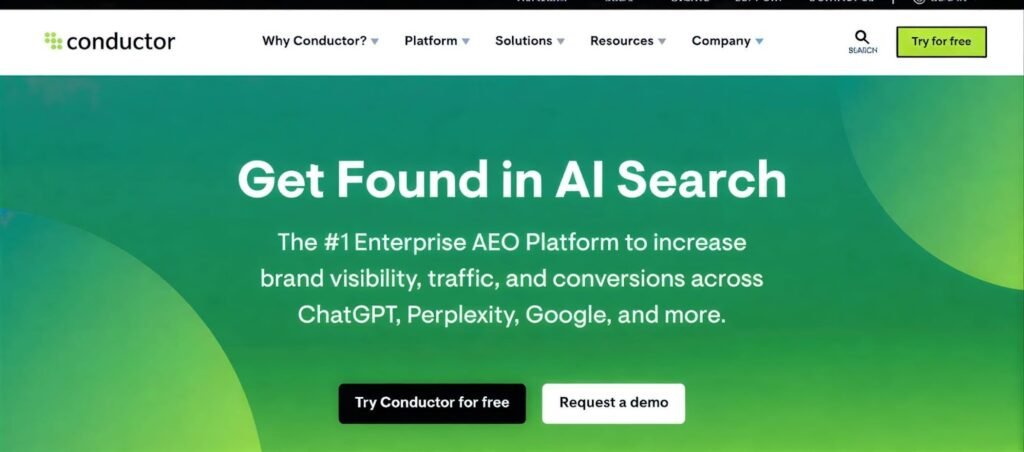
Conductor is a comprehensive AEO platform that integrates AI visibility tracking, content performance analysis, and site monitoring into one unified environment. With more than a decade of proprietary website and performance data, it enables teams to see exactly where their brand appears in AI-generated answers and immediately connect those insights to content optimization workflows. Unlike platforms that treat AI visibility as a separate reporting tool, Conductor positions it as part of a continuous execution loop, allowing organizations to measure real impact from AEO efforts. Its built-in writing assistant, MCP server integrations, and real-time technical alerts make it ideal for enterprise teams seeking end-to-end control over AI visibility.
Limitations: Custom pricing and onboarding complexity may be a barrier for smaller teams.
2. Semrush
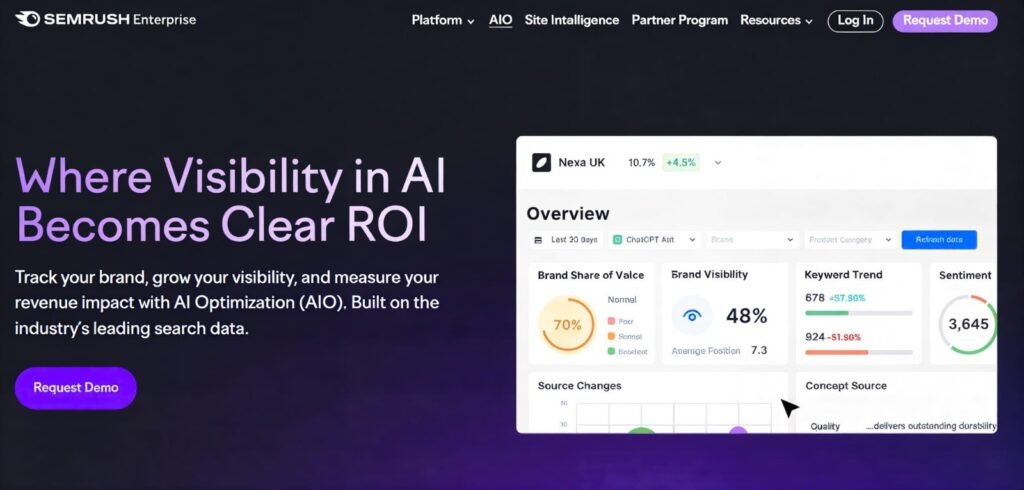
Semrush has evolved from a traditional SEO platform into a solution that also includes AI visibility tracking and AI Overview monitoring. It allows teams to see how content performs across AI-powered answer engines while maintaining access to keyword research, competitor insights, and technical SEO audits. The platform’s AI visibility data is spread across multiple reports, which can make it less seamless to connect AEO insights to actionable content improvements. Still, for teams already invested in Semrush, it provides a convenient entry point into monitoring AI citations alongside existing SEO workflows.
Limitations: AI insights are somewhat siloed and generic recommendations may require manual adaptation.
3. Profound
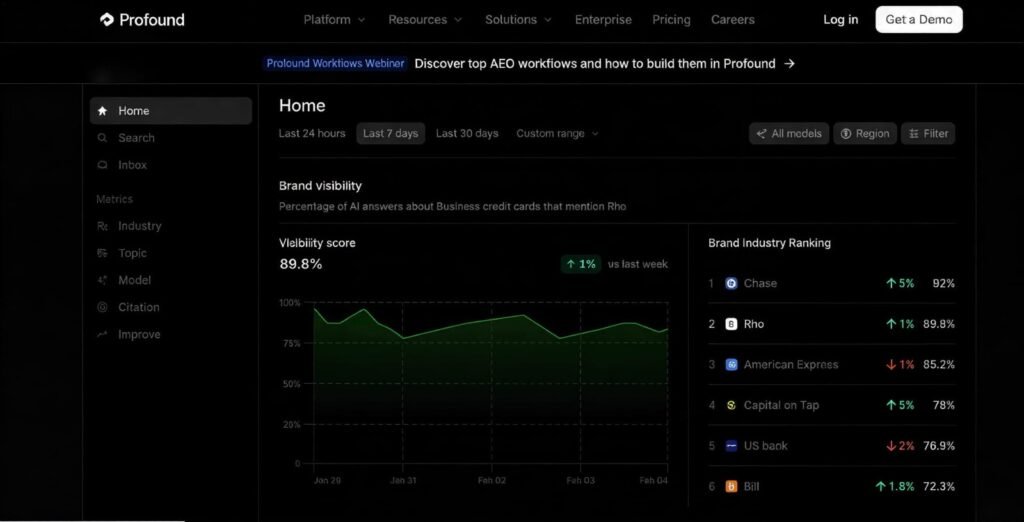
Profound focuses on tracking brand mentions, citations, and competitive visibility across major AI answer engines. It provides detailed insights into how often a brand is cited, which competitors appear instead, and which prompts trigger mentions. Profound excels in reporting and benchmarking, offering historical trend analysis to understand visibility patterns. However, it functions mainly as a monitoring tool, requiring teams to use external platforms for content creation and optimization.
Limitations: No integrated content execution features, relies on web scraping for some data.
4. Writesonic
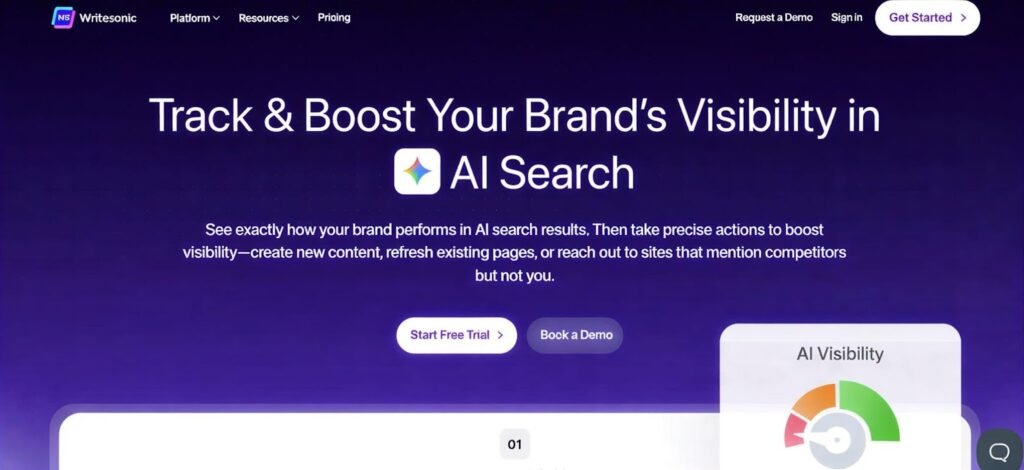
Writesonic combines AI content generation with AEO-oriented guidance. It enables teams to produce, update, and optimize content specifically to increase the chance of being cited in AI-generated answers. By aligning content creation with AEO requirements, Writesonic simplifies the process of generating answer-ready content at scale. However, its dedicated visibility tracking capabilities are less advanced than platforms built purely for monitoring AI citations.
Limitations: Human editing is still required for content quality, AI citation tracking is limited.
5. Athena
Athena is tailored for teams that want to understand why AI systems cite certain content. It goes beyond counting mentions to analyze how content structure, formatting, and depth influence AI selection. These insights can inform content adjustments that increase citation potential. While Athena provides valuable analytical depth, smaller teams may find it complex to interpret without dedicated expertise.
Limitations: Steep learning curve and enterprise-level pricing.
6. Surfer SEO
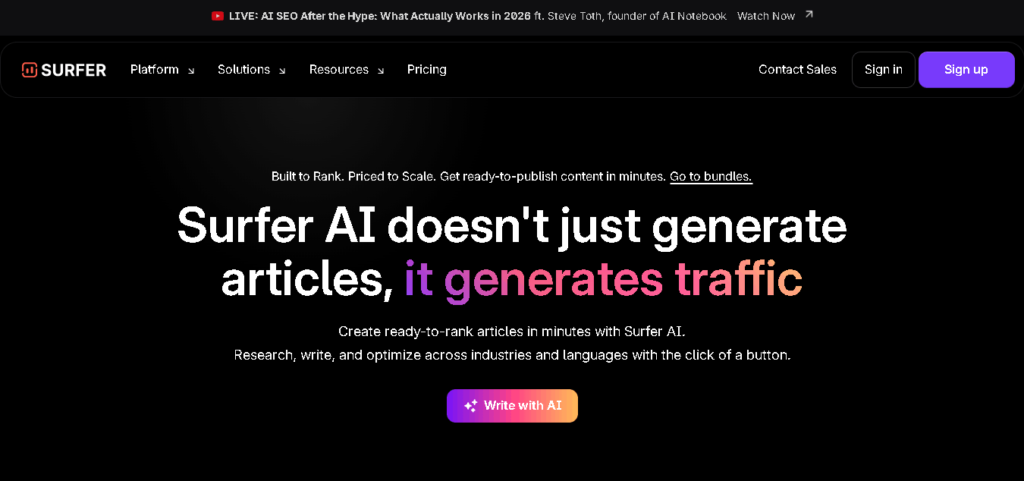
Surfer SEO has expanded from traditional content optimization into AI-aware guidance. It identifies content patterns that influence AI responses, helping teams structure text, headings, and topics for better AI visibility. While it excels at optimizing content for relevance and readability, its tracking of actual AI citations across multiple platforms is limited compared to purpose-built AEO solutions.
Limitations: AI visibility features are secondary; per-article pricing can be costly for large volumes.
7. Peec AI
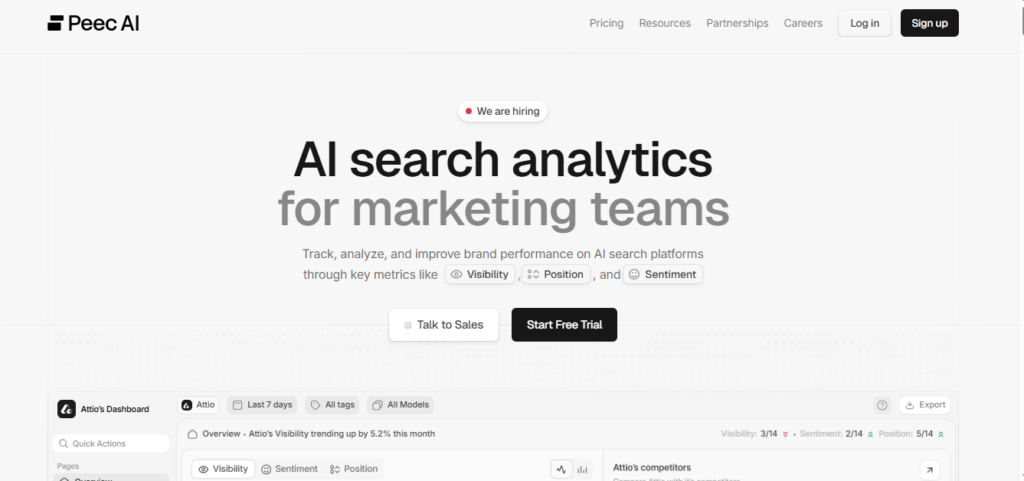
Peec AI bridges AI visibility data and actionable recommendations. It tracks brand mentions across AI models and provides practical guidance to improve citation potential. The dashboard is intuitive, making it accessible for non-technical teams. Its coverage across AI engines is narrower than some enterprise solutions, and historical data depth is limited.
Limitations: Manual implementation required, limited platform coverage.
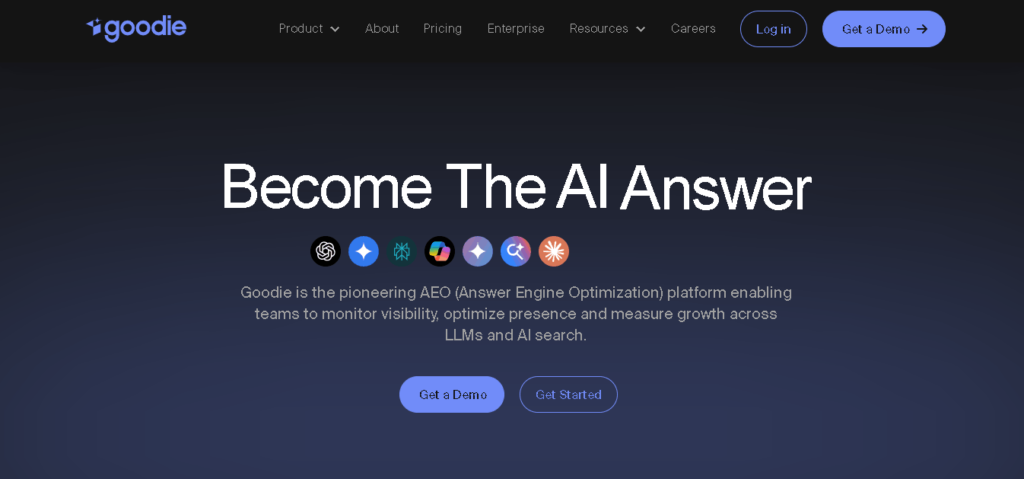
8. Goodie
Goodie focuses on simplicity, helping teams new to AEO track brand mentions in AI-generated answers. The platform provides clear dashboards with basic sentiment analysis and competitor tracking. While easy to adopt, it lacks advanced analytical features, multi-platform coverage, and scalability for larger organizations.
Limitations: Limited depth of insights and optimization suggestions.
9. Ahrefs
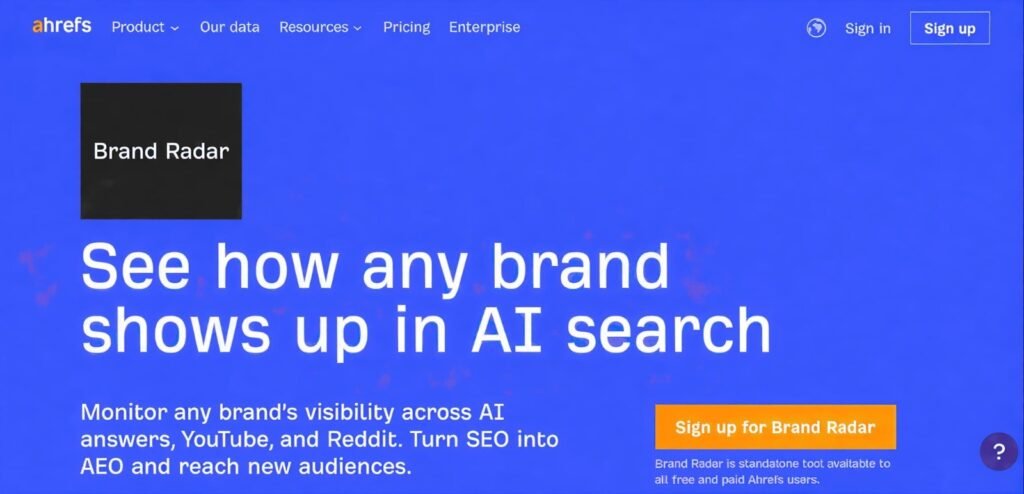
Ahrefs, primarily an SEO platform, now includes features that give limited visibility into AI citations, such as entity tracking and featured snippet monitoring. It is best used as a supplementary tool for teams already focused on backlinks and keyword performance, offering basic awareness of AI visibility alongside conventional SEO metrics.
Limitations: Minimal AEO-specific tracking and no integrated content optimization for AI citations.
10. Quattr
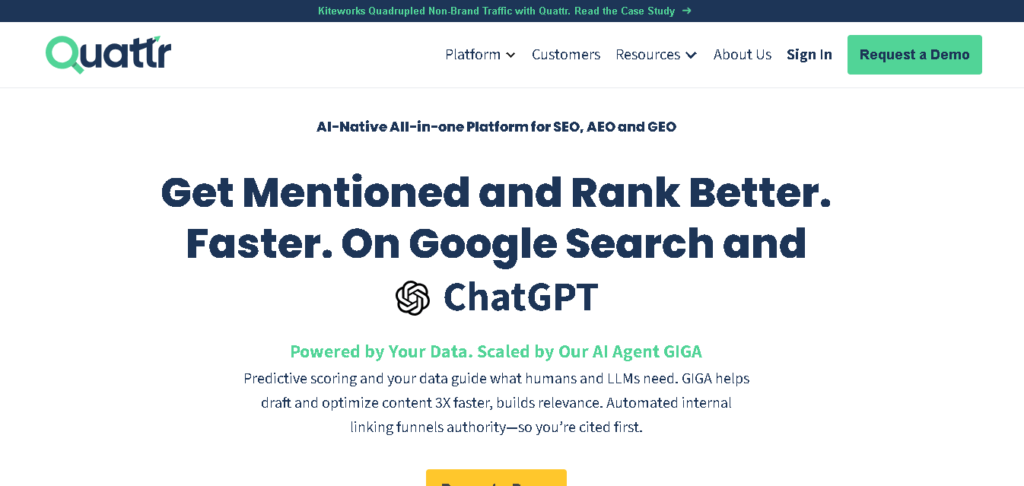
Quattr connects AI visibility signals with SEO execution, enabling teams to turn insights into actionable optimizations. Automation features such as internal linking and content adjustments allow brands to improve AI visibility over time. However, AEO-specific metrics like prompt-level citations and answer engine variance are less detailed than on purpose-built platforms.
Limitations: Higher complexity and custom pricing may not suit small teams.
Tools Overview With Pros And Cons
| Tool | Focus / Strength | Best For | Limitations |
| Conductor | End-to-end AEO + content + site monitoring | Large enterprises needing unified AI visibility & execution | Custom pricing; onboarding time required |
| Semrush | SEO + AI Overview tracking | Mid-sized teams already using Semrush | AI data scattered across reports; generic recommendations |
| Profound | Brand mention & citation tracking | Teams focused on AI citation monitoring & benchmarking | Execution requires external tools; scraping-based data |
| Writesonic | AI content creation + optimization guidance | Content teams producing at scale | Limited AI visibility depth; needs human editing |
| Athena | Citation mechanics & content structure insights | Data-driven enterprise teams | Steep learning curve; enterprise pricing |
| Surfer SEO | Content optimization for AI + SEO | Teams already using Surfer for content | AI tracking secondary; per-article pricing can be high |
| Peec AI | Actionable recommendations from AI data | Marketing teams want practical guidance | Narrower AI coverage; manual implementation needed |
| Goodie | Simple monitoring for beginners | Small teams starting AEO | Limited analytics; less scalable |
| Ahrefs | SEO & emerging AI visibility | SEO-focused teams | Limited AEO-specific features; no integrated AEO workflows |
| Quattr | Execution-oriented AI + SEO | SEO teams transitioning to AI search | Limited citation-level insights; complex pricing |
Our Hands-On Experience With AEO Tools: What We Loved Most
While researching the best AEO tools for 2026, we didn’t just rely on features listed on websites; we personally tested each platform to understand how it performs in real-world scenarios. From tracking AI citations to optimizing content for maximum visibility, we explored how each tool supports brands in the AI-driven search landscape.
After extensive hands-on use, one platform stood out for us: Conductor. Its unified dashboard, real-time AI visibility tracking, and seamless integration with content workflows made it our top choice for both insight and action. While other tools like Semrush, Profound, and Writesonic have unique strengths, Conductor delivered the most comprehensive experience, making it ideal for teams serious about Answer Engine Optimization.
This personal experience ensures that our recommendations aren’t just theoretical; they’re grounded in actual use and performance.
Conclusion
As AI-generated answers become the primary interface between users and information, brands must adapt beyond traditional SEO strategies. AEO tools provide the visibility and insights needed to understand how AI systems represent brands and select sources. Choosing the right AEO platform depends on whether a team needs simple monitoring, deep analysis, or a fully integrated execution workflow. In an AI-first search landscape, consistent AEO investment is no longer optional but essential for sustaining authority and competitiveness.
Frequently Asked Questions (FAQs)
What are AEO tools?
AEO (Answer Engine Optimization) tools monitor how brands and content appear inside AI-generated responses from platforms like ChatGPT, Perplexity, and Google AI Overviews, rather than traditional search results.
Why are AEO tools important for brands in 2026?
As users increasingly rely on AI answers instead of search links, AEO tools help brands understand if they are cited, mentioned accurately, and visible within AI-generated content.
How do AEO tools differ from traditional SEO tools?
Traditional SEO focuses on keyword rankings and backlinks, while AEO tools track brand mentions, AI citations, sentiment, and how content is selected by answer engines.
Do AEO tools track multiple AI platforms?
Yes, most modern AEO tools monitor multiple AI models and answer engines like ChatGPT, Perplexity, Gemini, Claude, and Google AI Overviews for comprehensive visibility.
Can AEO tools help fix incorrect AI responses about my brand?
AEO tools can highlight inaccurate or outdated AI responses, enabling you to update your authoritative content so that AI systems cite correct information.
Are AEO tools suitable for small businesses?
Many AEO platforms offer affordable plans and easy dashboards, making basic AI visibility tracking accessible for small to mid-sized teams.
How often should brands monitor AI visibility?
Weekly monitoring is recommended because AI-generated answers change frequently, and consistent tracking ensures outdated or incorrect mentions are caught early.
Can AEO tools improve AI-generated visibility?
While they don’t directly control AI rankings, AEO tools provide insights that help optimize content structure, relevance, and citations to improve chances of being referenced.
Do AEO tools affect traditional search rankings?
AEO tools focus on being cited by AI engines, which is separate from traditional SEO; improved AI citations can indirectly boost visibility and traffic from AI-driven search experiences.
What metrics should I focus on with AEO tracking?
Key metrics include brand mention frequency, citation sources, sentiment accuracy, share of voice compared to competitors, and prompt-level visibility across AI platforms.